Table of Contents
- Why I Wrote This
- Not Applying for Permits Early Enough
- Underestimating Travel Distances
- Not Carrying Enough Cash
- Visiting in the Wrong Season
- Overpacking
- Skipping the Smaller States
- Not Booking Wildlife Safaris Ahead
- Ignoring Altitude Sickness
- Relying Too Much on Google Maps
- Not Trying Local Food
- Final Thoughts
Why I Wrote This
My first trip to Northeast India was in July 2019. I landed in Guwahati with a suitcase the size of a small child, zero permits, a phone loaded with Google Maps offline data that turned out to be wildly inaccurate, and the naive belief that I could cover Meghalaya, Arunachal Pradesh, and Nagaland in eight days.
I made almost every mistake on this list. Some were funny in hindsight — like the time I showed up at the Arunachal Pradesh border without an ILP and had to turn around. Some were genuinely miserable — like discovering that ATMs in remote Nagaland villages had been empty for three days, and I had 200 rupees to my name.
This guide exists so you do not repeat my mistakes. Every tip here comes from personal experience or from watching fellow travellers make the same errors. Let us get into it.
Mistake #1 — Not Applying for Permits Early Enough
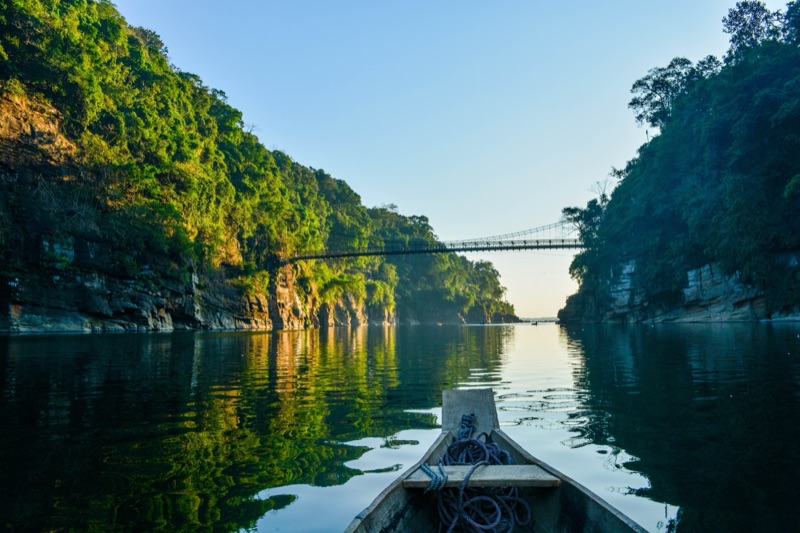
Four of the eight Northeast states require Inner Line Permits (ILP) for Indian nationals: Arunachal Pradesh, Nagaland, Mizoram, and Manipur. Foreign nationals need Protected Area Permits (PAP) for Arunachal Pradesh and parts of Sikkim. These are not suggestions — you will be turned back at checkpoints without them.
The application process is not hard, but it takes time. Online ILP portals work reasonably well for Nagaland and Manipur, but Arunachal Pradesh permits can take 7 to 14 days to process, especially during peak season. I have seen people stuck in Guwahati for three days waiting for a permit they could have applied for from home.
Fix: Apply for all permits at least 2 to 3 weeks before your trip. Carry printed copies plus digital backups. Read our complete permit guide for state-by-state instructions.
Mistake #2 — Underestimating Travel Distances
Northeast India looks small on a map. The distance from Guwahati to Tawang is about 450 kilometres. In Rajasthan, that is a five-hour drive. In Arunachal Pradesh, that is a two-day journey through winding mountain roads, military convoys, and at least one chai stop where the road just... disappears into a landslide zone.
I once planned to drive from Shillong to Cherrapunji (65 km) and then to Dawki (another 65 km) and back in a single day. It is technically possible, but I spent more time in the car than at any destination. The roads are beautiful but slow — average speeds of 25 to 35 km/h are normal on mountain routes.
Reality check: A 100 km journey in Northeast India can take 3 to 5 hours. Always assume double the time that Google Maps predicts. Build buffer days into your itinerary — you will thank yourself.
Mistake #3 — Not Carrying Enough Cash
UPI and card payments are spreading across the Northeast, but once you leave the main towns — Guwahati, Shillong, Gangtok, Imphal — cash is still king. Many guesthouses, local restaurants, shared taxis, and village homestays only accept cash. ATMs in remote areas are unreliable. They run out of cash, go offline during power cuts, or simply do not exist.
I ran out of cash in Ziro Valley, Arunachal Pradesh. The one ATM in town had been empty for two days. I ended up borrowing money from a homestay owner and paying her back via bank transfer three days later. She was incredibly gracious about it, but the stress was real.
Fix: Withdraw enough cash in Guwahati, Shillong, or Gangtok to last your entire trip in remote areas. I carry at least 10,000 to 15,000 rupees per person for a week-long trip beyond the main cities. Keep it in different bags in case one gets lost.
Mistake #4 — Visiting in the Wrong Season (Yes, This Was Me)
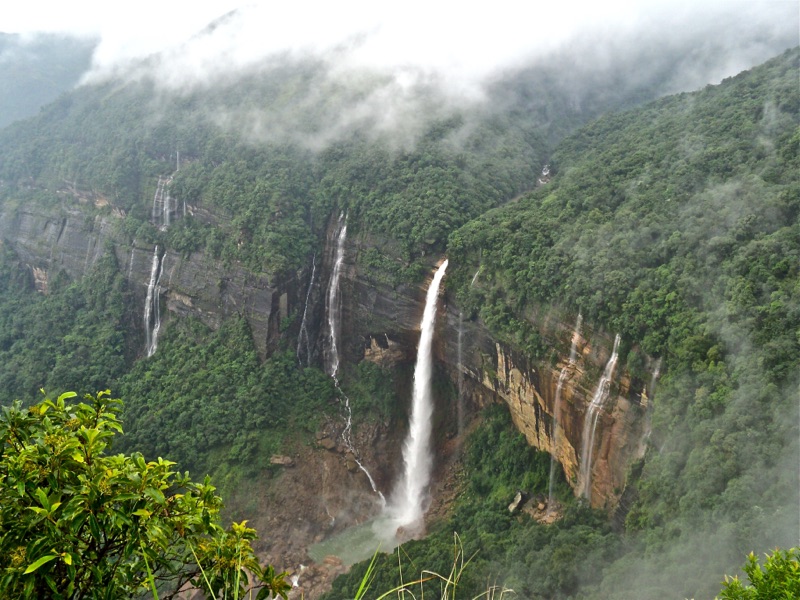
My first Northeast trip was in July. July. Peak monsoon. I wanted to see Meghalaya's waterfalls at their best, and yes, they were spectacular. Nohkalikai Falls was absolutely thundering. But here is what nobody told me: the rain was so relentless that I could not actually see the waterfalls half the time because the mist and cloud cover were impenetrable. I spent three days in Cherrapunji and saw clear sky for approximately 45 minutes total.
Meanwhile, Kaziranga was closed (monsoon flooding), roads to Tawang were blocked by landslides, and I got stuck in a village in the East Khasi Hills for an extra day because the road flooded overnight. My shoes did not dry for the entire trip. My camera fogged up every time I stepped outside.
Was there beauty in it? Absolutely. Would I recommend it for a first-timer? Absolutely not.
The golden rule: October to April is the safe window for most of the Northeast. October to December is peak season for a reason — everything is accessible, the weather is excellent, and festivals are in full swing. Read our best time to visit guide for a month-by-month breakdown.
Planning Your First Trip?
Get our free 2026 Northeast India Travel Guide with checklists, packing lists, and permit templates.
Subscribe & Download Free GuideMistake #5 — Overpacking
You do not need three pairs of jeans, a formal outfit, and a full-size toiletry kit for a Northeast India trip. What you do need is layers, a rain jacket, good walking shoes, and a backpack small enough to carry comfortably on steep trails and into shared jeeps where luggage space is basically non-existent.
I made the mistake of bringing a hard-shell suitcase on my first trip. Try squeezing a suitcase into a Maruti Suzuki Sumo with seven other passengers and their bags. The driver strapped it to the roof. In the rain. I switched to a 40-litre backpack on my next trip and never looked back.
Fix: Pack a 35 to 45 litre backpack. Bring layers (the temperature can swing 20 degrees Celsius in a day), a good rain jacket, quick-dry clothes, and sturdy walking shoes. Leave the suitcase at home.
Mistake #6 — Skipping the Smaller States
Everyone goes to Meghalaya and Sikkim. They deserve the hype. But Nagaland, Manipur, Mizoram, and Tripura are where you will find the most authentic, least-touristed experiences in all of India. Kohima's World War II cemetery is deeply moving. Loktak Lake's floating islands are surreal. Aizawl's hillside churches and Sunday markets are unlike anything in mainstream India.
I skipped Manipur on my second trip because I thought it would be too much hassle with permits. I regretted it the moment a fellow traveller showed me photos of Loktak Lake at sunset. I went back specifically for Manipur six months later and it became one of my favourite states.
Fix: If you have more than a week, add at least one lesser-visited state to your itinerary. Nagaland during Hornbill Festival (December 1-10) is worth planning an entire trip around. Browse our destination guides for each state.
Mistake #7 — Not Booking Wildlife Safaris Ahead
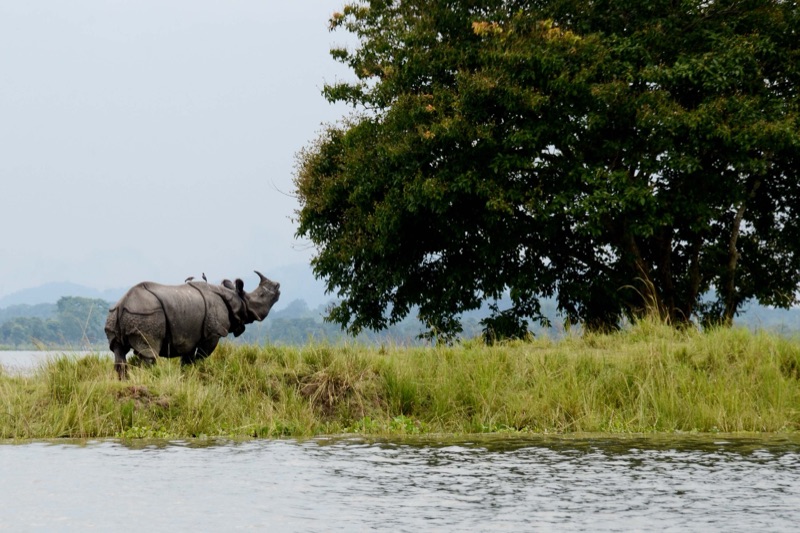
Kaziranga National Park jeep safaris sell out. During peak season (November to February), the popular Central Range morning jeep slots can be fully booked a week in advance. I have met travellers who drove all the way to Kaziranga from Guwahati only to find no jeep slots available for the next two days.
Elephant safaris are even more limited — only a handful of slots per day, and they are first-come-first-served at the park gate at 5 AM. If you are not staying inside the park or at a lodge right next to the gate, you are at a disadvantage.
Fix: Book Kaziranga jeep safaris online at least a week in advance. For elephant safaris, stay at a lodge near the park gate and be ready to queue by 4:30 AM. Better yet, book a tour package that includes pre-arranged safari slots — it removes the headache entirely.
Mistake #8 — Ignoring Altitude Sickness
This one can genuinely ruin your trip — or land you in a hospital. If you fly into Bagdogra (at sea level) and drive straight to North Sikkim or take the Tawang route in Arunachal Pradesh, you will gain 3,000 to 4,000 metres of altitude in less than two days. That is a recipe for Acute Mountain Sickness (AMS).
Symptoms include headache, nausea, dizziness, and shortness of breath. Most people get mild symptoms that resolve with rest. But I have seen one traveller at Gurudongmar Lake who had to be evacuated because he ignored his symptoms and kept pushing higher.
Take this seriously: Acclimatise for at least one night at a mid-altitude point (Gangtok at 1,650m or Bomdila at 2,415m) before going higher. Stay hydrated. Avoid alcohol at altitude. If you feel symptoms, do not ascend further — descend immediately if they worsen. Carry Diamox if your doctor recommends it.
Mistake #9 — Relying Too Much on Google Maps
Google Maps in Northeast India is... creative. It will cheerfully route you down roads that no longer exist, through military zones you cannot enter, and across rivers with no bridge. It once sent me down a single-track dirt road in Nagaland that ended at a farmer's field. The farmer thought it was hilarious. I did not.
The driving time estimates are especially unreliable. Google says three hours? Plan for five. The algorithm does not account for military convoys (common on the Tawang route), road construction (constant), animal crossings, or the fact that half the road might be missing after a landslide.
Fix: Use Google Maps for general routing, but always cross-check with your hotel, local drivers, or fellow travellers. Ask your accommodation to confirm road conditions the day before you travel. Local knowledge beats any algorithm in the Northeast.
Mistake #10 — Not Trying Local Food
I get it. The food in Northeast India looks unfamiliar. Fermented bamboo shoot? Pork with akhuni (fermented soybean)? Silk worm pupae? It is not what most of India eats, and it can be intimidating if you have never stepped outside the dal-chawal comfort zone.
But if you spend your entire trip eating at restaurants that serve paneer butter masala and fried rice, you are missing one of the most exciting food cultures in Asia. Naga smoked pork with raja mirchi (one of the world's hottest chillies) is a religious experience. Khasi Jadoh is comfort food that will haunt your dreams. Sikkimese thukpa on a cold mountain evening is pure therapy.
On my first trip, I stuck to safe options. On my second trip, I ate everything locals recommended. The second trip was better in every way, and the food was a big reason why. Read our complete food guide for state-by-state recommendations.
Fix: Eat where locals eat. Ask your homestay host to cook a traditional meal. Try at least one dish you have never heard of in every state. Your stomach (and your Instagram) will thank you. If you are vegetarian, flag this early — many traditional Northeast dishes are meat-heavy, but vegetarian options always exist if you communicate your needs.
Final Thoughts
Northeast India is one of the most rewarding travel destinations in the world. The landscapes are staggering, the cultures are fascinating, and the people are genuinely warm. But it is not a plug-and-play destination like Goa or Rajasthan. It rewards preparation and punishes complacency.
Get your permits sorted. Carry cash. Pack light. Respect the distances. Check the season. And for the love of all that is good, try the food.
Do those things, and you will have the trip of a lifetime. Skip them, and you will have a list of mistakes as long as mine.
Ready to Plan Your Trip?
Subscribe for deal alerts, seasonal travel tips, and our free 2026 Northeast India Travel Guide.
Subscribe & Get Free Guide