Why Visit Meghalaya? The Abode of Clouds
Meghalaya means "the abode of clouds" in Sanskrit, and the name barely does justice to this extraordinary state. Tucked between Assam to the north and Bangladesh to the south, Meghalaya is home to some of the most unique landscapes and cultural experiences in all of India. This is a land where living root bridges — grown over centuries by weaving the aerial roots of rubber fig trees across rivers — serve as functional footpaths. Where two villages compete for the title of wettest place on Earth. And where Mawlynnong, a tiny Khasi hamlet, has been celebrated as the cleanest village in Asia.
Meghalaya is the northeast state that consistently surprises even seasoned Indian travellers. The crystal-clear Umngot River at Dawki, where boats appear to float on air above the turquoise riverbed, has become one of India's most photographed natural wonders. The limestone caves of Jaintia Hills include some of the longest and deepest in the subcontinent. Cherrapunji (Sohra) and Mawsynram hold world rainfall records, yet during the dry season the same plateaus offer dramatic canyon views, thundering waterfalls, and some of the best trekking in northeast India.
Unlike many northeast Indian states, Meghalaya requires no special permits for Indian tourists, making it one of the most accessible destinations in the region. Combine that with a well-developed tourism infrastructure in Shillong and Cherrapunji, friendly Khasi and Jaintia communities, delicious local cuisine, and year-round appeal, and you have a state that deserves a prominent place on every Indian traveller's bucket list. This Meghalaya travel guide for 2026 covers everything you need to plan your perfect trip.
Top Places to Visit in Meghalaya
1. Shillong — The Scotland of the East
Meghalaya's capital sits at 1,496 metres above sea level and has long been called the Scotland of the East for its rolling hills, pine forests, and pleasant climate. Shillong is a compact, walkable city with a vibrant cafe culture, live music scene (it is the rock music capital of India), and colonial-era architecture. Key attractions include Ward's Lake, Shillong Peak (the highest point in the city offering panoramic views), Don Bosco Museum (one of the finest museums in northeast India covering the cultures of all NE states), and the bustling Police Bazaar area. Shillong also serves as the base for day trips to Cherrapunji, Dawki, and Mawlynnong.
2. Cherrapunji (Sohra) — Where Rain Meets Wonder
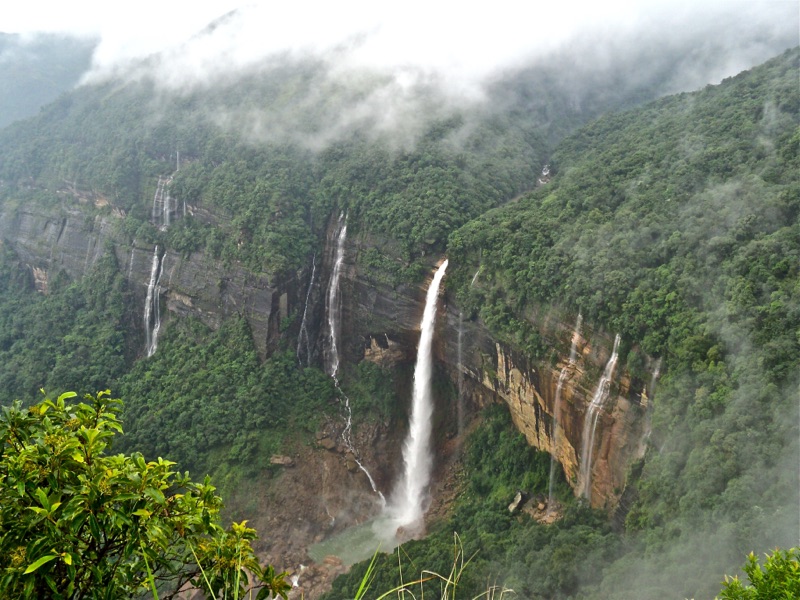
Cherrapunji, officially known as Sohra, once held the world record for the most rainfall in a single year and still receives an extraordinary amount of rain annually. But Cherrapunji is far more than a weather statistic. The Nohkalikai Falls, India's tallest plunge waterfall at 340 metres, drops from a cliff edge into a milky-green pool far below. The Seven Sisters Falls cascade down a limestone cliff face during the monsoon. Mawsmai Cave, a well-lit limestone cave, offers an easy walking tour through dramatic formations. And the Eco Park provides jaw-dropping views of the Bangladesh plains stretching to the horizon thousands of feet below.
3. Dawki and the Umngot River
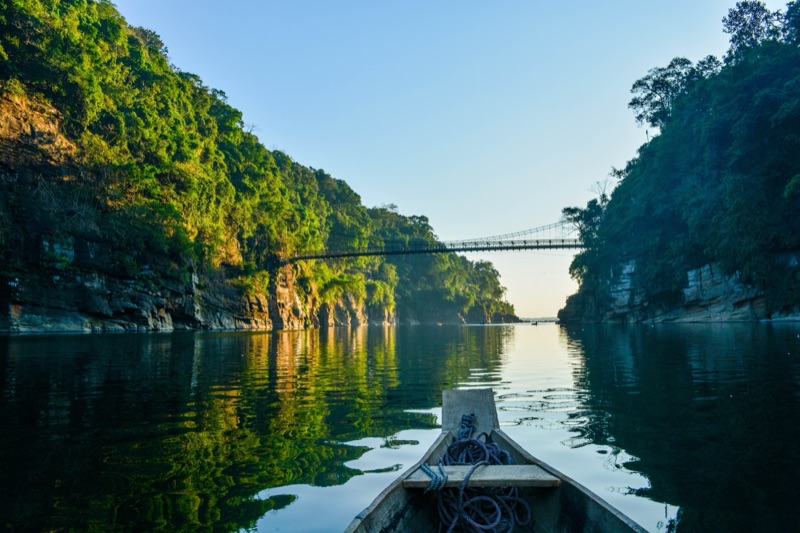
The Umngot River at Dawki, on the India-Bangladesh border, has become one of the most viral travel destinations in India thanks to photographs showing boats seemingly suspended in mid-air over the crystal-clear riverbed. The clarity of the water is genuinely astonishing — you can see every pebble and fish several metres below the surface. Boat rides cost approximately INR 500 to 800 per boat and last 30 to 45 minutes. The best time to see the river at its clearest is October through May, before the monsoon muddies the waters. Dawki is approximately 80 kilometres from Shillong (about 2.5 hours by car).
4. Mawlynnong — Asia's Cleanest Village
Mawlynnong earned the title of the cleanest village in Asia in 2003, and the community has maintained that distinction ever since. Every household maintains bamboo dustbins, pathways are swept daily, and waste is composted in bamboo pits. The village is tiny — you can walk through it in 30 minutes — but the pristine lanes, flowering gardens, and community pride are genuinely inspiring. A bamboo skywalk platform offers views of the surrounding jungle canopy and, on clear days, the Bangladesh plains. Mawlynnong is 90 kilometres from Shillong and is typically combined with a Dawki day trip.
5. Living Root Bridges
Meghalaya's living root bridges are arguably the state's most iconic attraction and one of the most remarkable examples of human-nature collaboration anywhere in the world. The Khasi and Jaintia people have been training the aerial roots of the Ficus elastica (rubber fig) tree across rivers and streams for centuries, creating living, growing bridges that strengthen with age. The most famous is the Double Decker Root Bridge at Nongriat village, near Cherrapunji, which requires a trek of approximately 3,500 steps down (and back up) through dense subtropical forest. The trek takes about 2 to 3 hours each way. For an easier experience, the single-root bridge at Riwai village near Mawlynnong is accessible without a major trek.
6. Mawsynram
Mawsynram has officially overtaken Cherrapunji as the wettest place on Earth, receiving an average annual rainfall of about 11,871 millimetres. The village itself is small and quiet, but the surrounding landscape is dramatic — deep valleys, thick forests, and the Mawjymbuin Cave which contains a massive stalagmite shaped like a Shiva lingam, making it a pilgrimage site. Mawsynram is about 65 kilometres from Shillong (approximately 2 hours by car) and can be visited as a half-day trip, often combined with Cherrapunji.
7. Jaintia Hills
The Jaintia Hills district in eastern Meghalaya is the state's least-visited region and perhaps its most rewarding for adventurous travellers. This is India's caving capital, home to some of the longest and deepest caves in the subcontinent, including Krem Liat Prah (the longest cave in India at over 34 kilometres). The Krangsuri Waterfall, a stunning turquoise pool surrounded by a horseshoe-shaped cliff, is one of the most beautiful swimming spots in all of northeast India. The Jaintia Hills are also home to ancient megaliths and monoliths, some dating back centuries, that dot the landscape around Nartiang village. The area requires more time and effort to explore but rewards travellers with a sense of genuine discovery.
Best Time to Visit Meghalaya
October to May — The Ideal Window
The dry season from October through May is the best time for most travellers to visit Meghalaya. October and November offer lush post-monsoon greenery with clearing skies and pleasant temperatures (15°C to 24°C in Shillong). This is when the Umngot River at Dawki is at its clearest and the waterfalls are still flowing strongly from recent rains. December through February brings cooler weather (5°C to 15°C in Shillong) with occasional fog, which gives the hills an atmospheric quality. March through May is warm and dry with temperatures reaching 25°C, ideal for trekking to the living root bridges and exploring caves.
June to September — Monsoon Season
The monsoon is Cherrapunji and Mawsynram's claim to fame, and experiencing the sheer volume of rainfall is genuinely awe-inspiring. Waterfalls are at their most powerful, the landscape is impossibly green, and you will have most attractions to yourself as tourist numbers drop sharply. However, the practical challenges are significant — roads can be blocked by landslides, the Dawki river turns murky and brown, trekking to root bridges becomes slippery and dangerous, and flight delays and cancellations are common. If you visit during the monsoon, pack high-quality rain gear, waterproof bags for electronics, and build flexibility into your itinerary.
How to Reach Meghalaya
By Air
The nearest major airport is Lokpriya Gopinath Bordoloi International Airport (GAU) in Guwahati, Assam, approximately 100 kilometres from Shillong. Guwahati has direct flights from Delhi, Mumbai, Kolkata, Bangalore, Chennai, and several other cities on airlines including IndiGo, Air India, SpiceJet, Vistara, and Akasa Air. Shillong has its own airport at Umroi, about 30 kilometres from the city, but it has very limited service — only a few weekly flights to Kolkata. Most travellers fly into Guwahati and drive to Shillong.
From Guwahati to Shillong
The drive from Guwahati airport to Shillong takes approximately 2.5 to 3 hours (100 km) via NH6. Shared taxis (Sumo/Tata Sumo) are available from both the airport and Guwahati's Paltan Bazaar and cost around INR 400 to 500 per seat. Private taxis cost INR 2,000 to 3,000 for the full car. Meghalaya Transport Corporation (MTC) runs regular buses (INR 150 to 250) from Guwahati to Shillong throughout the day. The road is well-maintained and climbs through beautiful forested hills, passing through the Umiam Lake viewpoint — one of the most scenic spots on the entire route.
By Train
Guwahati railway station is one of the best-connected stations in northeast India, with regular trains from Delhi (Rajdhani Express, about 26 hours), Kolkata (about 18 hours), and other major cities. From Guwahati station, you can take a taxi or bus to Shillong. There is no railway station in Meghalaya itself.
5-Day Meghalaya Itinerary
We have a detailed day-by-day itinerary with specific timings, restaurant recommendations, and booking tips in our dedicated guide. Here is a quick overview:
Day 1: Arrive in Shillong
Morning: Fly into Guwahati and drive to Shillong (3 hours). Stop at Umiam Lake viewpoint for photographs of the stunning reservoir surrounded by pine-covered hills.
Afternoon: Check into your hotel and explore the city. Visit Ward's Lake, the Cathedral of Mary Help of Christians, and the Don Bosco Centre for Indigenous Cultures, a seven-storey museum with excellent exhibits on northeast Indian tribal heritage.
Evening: Walk through Police Bazaar, grab dinner at a local restaurant, and sample Khasi cuisine for the first time. Try Jadoh (red rice cooked with pork) if you eat meat. Overnight in Shillong.
Day 2: Cherrapunji (Sohra) Day Trip
Morning: Depart for Cherrapunji (55 km, about 2 hours). Visit the Nohkalikai Falls viewpoint — India's tallest plunge waterfall is most dramatic in the morning light. Walk through Mawsmai Cave, a well-lit limestone cave that takes about 20 minutes to explore.
Afternoon: Visit the Eco Park for panoramic views of the Cherrapunji plateau and the Bangladesh plains far below. Stop at the Seven Sisters Falls viewpoint and the Nohsngithiang Falls (best during monsoon). If time permits, visit the Arwah Cave for a less touristy caving experience.
Evening: Return to Shillong or stay overnight in Cherrapunji (recommended if you plan to trek to the Double Decker Root Bridge the next day). Overnight in Cherrapunji or Shillong.
Day 3: Living Root Bridge Trek
Full Day: This is the highlight of any Meghalaya trip. From Tyrna village near Cherrapunji, descend approximately 3,500 steps through dense subtropical forest to reach the Double Decker Root Bridge at Nongriat village. The descent takes 1.5 to 2 hours. Spend time exploring the bridges, swim in the natural rock pool nearby, and have a simple lunch at a village stall. The ascent back takes 2 to 3 hours — start heading back by 2 PM at the latest to reach Tyrna before dark. Hire a local guide (INR 500 to 800) for safety and navigation. This trek is moderately strenuous — carry at least 2 litres of water and wear proper trekking shoes.
Evening: Return to Shillong (if you stayed in Cherrapunji) or rest in Cherrapunji. Overnight in Shillong.
Day 4: Dawki and Mawlynnong
Morning: Depart for Dawki (80 km from Shillong, about 2.5 hours). Take a boat ride on the Umngot River (INR 500 to 800 per boat) — the transparent water is best experienced between 9 AM and 11 AM when sunlight illuminates the riverbed. If you are visiting during the dry season, the water clarity is genuinely extraordinary.
Afternoon: Drive to Mawlynnong (about 45 minutes from Dawki). Walk through Asia's cleanest village, visit the bamboo skywalk for canopy views, and see the naturally balanced rock formation nearby. The village is small but the sense of community pride and cleanliness is remarkable.
Evening: Return to Shillong (90 km, about 3 hours). Overnight in Shillong.
Day 5: Shillong Exploration and Departure
Morning: Visit Shillong Peak (1,965 m) for panoramic views of the city and surrounding hills. Explore the Laitlum Canyon viewpoint (about 25 km from Shillong), where the Khasi Hills drop away into a vast valley — the view is often compared to the Grand Canyon. The drive through tiny villages and terraced hillsides is beautiful in itself.
Afternoon: Shop for local products at Police Bazaar or Bara Bazaar — pick up Khasi honey, turmeric, and locally made bamboo handicrafts. Depart for Guwahati airport (3 hours) for your evening flight.
Want the full day-by-day breakdown? Read our Complete 5-Day Meghalaya Itinerary with specific timings, restaurant picks, and booking details.
Where to Stay in Meghalaya
Shillong
Budget (INR 700 – 1,500/night)
Shillong has a growing hostel and budget hotel scene. Zostel Shillong (near Police Bazaar) offers dorm beds and private rooms with a social backpacker atmosphere. Hotel Centre Point and Hotel Polo Towers (budget rooms) are centrally located and reliable. For a more authentic experience, Khasi homestays in Laitumkhrah and Mawkhar offer rooms from INR 600 to 1,000 per night, often including a home-cooked breakfast.
Mid-Range (INR 2,000 – 5,000/night)
Hotel Polo Towers, Ri Kynjai Resort at Umiam Lake, and Cafe Shillong Bed & Breakfast are popular mid-range options. Ri Kynjai, set on the shores of Umiam Lake about 20 minutes from the city, is particularly scenic and offers both cottages and rooms with lake views. Hotel Tripura Castle, a heritage property, combines colonial architecture with modern amenities.
Luxury (INR 6,000 – 15,000+/night)
Vivanta by Taj Shillong is the city's top luxury property, offering world-class service, a spa, and fine dining with views of the Shillong hills. The Royal Heritage Tripura Castle provides a unique heritage luxury experience in a former royal residence.
Cherrapunji
Accommodation options in Cherrapunji are more limited but growing. Jiva Resort and Polo Orchid Resort are the top mid-range picks, both offering cliff-edge locations with dramatic valley views. For budget travellers, Cherrapunjee Holiday Resort and several local guesthouses offer clean rooms starting from INR 800 per night. If you plan to trek to the Double Decker Root Bridge, consider staying in Cherrapunji the night before to get an early start.
Permits for Meghalaya
For Indian Citizens
Great news: Indian citizens do not need any permit to enter or travel within Meghalaya. No Inner Line Permit (ILP) and no Restricted Area Permit (RAP) is required. You can travel freely to all tourist destinations in the state, including Shillong, Cherrapunji, Dawki, Mawlynnong, and the Jaintia Hills. This makes Meghalaya one of the most accessible northeast Indian states for domestic tourists.
For Foreign Nationals
Foreign tourists also do not need any special permit for Meghalaya. A valid Indian visa is sufficient for entry and travel throughout the state. Unlike Arunachal Pradesh, Nagaland, or Mizoram (which require an ILP or Protected Area Permit), Meghalaya is fully open to foreign visitors.
For information about permits for other northeast Indian states, check our comprehensive Permits Guide for Northeast India.
Meghalaya Trip Budget Breakdown (Per Person, 2026 Estimates)
Meghalaya is one of the more affordable destinations in northeast India. Shillong and Cherrapunji have a wide range of options for every budget. Here is a realistic daily breakdown for a 5-day trip:
| Category | Budget | Mid-Range | Comfort |
|---|---|---|---|
| Accommodation/night | INR 700 – 1,500 | INR 2,000 – 4,500 | INR 6,000 – 15,000 |
| Meals/day | INR 300 – 500 | INR 600 – 1,000 | INR 1,200 – 2,500 |
| Local transport/day | INR 400 (shared taxi) | INR 1,500 (hired taxi) | INR 2,500 – 4,000 (private car + driver) |
| Dawki boat ride | INR 500 – 800 per boat (shared between 2-4 people) | ||
| Root bridge guide | INR 500 – 800 per group | ||
| Sightseeing/entries | INR 100 – 200/day | INR 100 – 200/day | INR 100 – 200/day |
| 5-Day Total (approx.) | INR 8,000 – 12,000 | INR 18,000 – 30,000 | INR 45,000 – 85,000 |
Note: These estimates exclude flights to Guwahati. Return flights from Delhi to Guwahati typically cost INR 4,000 to 9,000 if booked 2-3 weeks in advance. For a complete breakdown of northeast India trip costs, check our Northeast India Budget Guide.
Meghalaya Food Guide — What to Eat
Meghalaya's cuisine is distinct from the rest of India, rooted in Khasi, Jaintia, and Garo tribal traditions. Rice is the staple, meat (especially pork and chicken) is central to most meals, and spices are used sparingly compared to mainstream Indian food. Here are the dishes you must try:
Jadoh
Jadoh is the quintessential Khasi dish — red rice cooked with pork (or sometimes chicken) and a blend of local spices including turmeric, ginger, and bay leaves. The rice absorbs the meat juices during cooking, resulting in a fragrant, savoury one-pot meal. You will find Jadoh at nearly every restaurant and roadside eatery in Shillong and Cherrapunji. A plate typically costs INR 80 to 150. Jadoh with pork is the most traditional version; Jadoh Snam uses pork blood for a richer flavour and darker colour.
Doh Khleh
Doh Khleh is a Khasi salad made with boiled pork, diced onions, and a generous amount of fresh ginger and chillies. It is served at room temperature and has a refreshing, spicy kick that cuts through the richness of the pork. Doh Khleh is often served as an accompaniment to rice meals but works equally well as a standalone snack. It is available at most local restaurants in Shillong and is a must-try for meat eaters.
Tungrymbai
Tungrymbai is a fermented soybean dish that serves as a staple side in Khasi households. The soybeans are fermented, then cooked with sesame seeds, ginger, garlic, and local herbs. The flavour is earthy, slightly pungent, and deeply umami — somewhat similar to Japanese natto or Korean doenjang but with its own distinct character. Tungrymbai is typically served with rice and a vegetable side. It is one of the few dishes in Meghalaya that is naturally vegetarian, making it a good option for non-meat eaters.
Ki Kpu (Rice Flour Dumplings)
Ki Kpu are small, steamed dumplings made from rice flour, often served as a snack or with tea. They come in sweet (with jaggery filling) and savoury versions. You will find them at local markets, especially Bara Bazaar in Shillong.
Doh Neiiong
Doh Neiiong is pork cooked with black sesame seeds, giving the dish a dark, nutty, rich sauce. The sesame seeds are ground into a paste and slow-cooked with pork pieces and onions. It is one of the richest Khasi dishes and is typically reserved for special occasions but can be found at traditional restaurants in Shillong.
Where to Eat in Shillong
For authentic Khasi food, try Trattoria in Laitumkhrah, Cafe Shillong, or any of the small local eateries near Bara Bazaar. Cafe MLQ in Police Bazaar is popular for its momos and Khasi thali. For international options, Dylan's Cafe serves excellent coffee and continental food in a cozy music-themed setting. Shillong's cafe culture is thriving, and you will find surprisingly good coffee and baked goods at multiple spots around Laitumkhrah.
Essential Travel Tips for Meghalaya
Pack Rain Gear Year-Round
Even outside the monsoon season, Meghalaya can surprise you with sudden showers, especially in Cherrapunji and Shillong. Carry a lightweight, packable rain jacket and a waterproof daypack or dry bag for your electronics and camera. If visiting during the monsoon (June-September), invest in a quality waterproof jacket, waterproof trekking shoes, and multiple pairs of quick-dry socks. An umbrella alone will not suffice in Cherrapunji-level rain.
Carry Cash
ATMs are available in Shillong (Police Bazaar and Laitumkhrah have several) and there are one or two in Cherrapunji town. However, ATMs frequently run dry, especially on weekends and public holidays. Dawki, Mawlynnong, and smaller villages have no ATMs and limited digital payment acceptance. Carry INR 3,000 to 5,000 in cash when leaving Shillong for day trips. UPI payments are increasingly accepted in Shillong's restaurants and shops but coverage drops sharply outside the city.
Wear Proper Trekking Shoes
If you plan to trek to the Double Decker Root Bridge at Nongriat, proper trekking shoes with good ankle support and grip are essential, not optional. The 3,500 steps are often wet and slippery even in the dry season. Sandals, sneakers, and fashion shoes are genuinely dangerous on this trek. Even for casual sightseeing at Cherrapunji viewpoints and Mawsmai Cave, sturdy footwear with non-slip soles will make your experience much safer and more comfortable.
Respect the Local Community
Meghalaya's Khasi and Jaintia communities are matrilineal — children take their mother's surname, and the youngest daughter inherits the family property. This unique social structure is a source of immense pride. Always ask permission before photographing people, especially in smaller villages. In Mawlynnong, follow the village's waste disposal rules. When visiting sacred forests or sacred groves (locally called law kyntang), do not remove any plants, stones, or natural materials. These groves are protected by deep cultural and spiritual tradition.
Plan for Road Conditions
Roads in Meghalaya range from excellent (the Guwahati-Shillong highway is a smooth four-lane road) to challenging (the road to Dawki has stretches with potholes and single-lane sections). During the monsoon, landslides can close roads for hours or even days. Build buffer days into your itinerary if travelling between June and September. Start early for long day trips — roads get busier in the afternoon, and you want to avoid driving on mountain roads after dark.
Altitude and Fitness
Unlike Sikkim or Arunachal Pradesh, Meghalaya does not pose significant altitude concerns. Shillong sits at just 1,496 metres, and even the highest points you will visit are under 2,000 metres. However, the Double Decker Root Bridge trek involves a significant physical challenge: 3,500 steps down and back up. If you are not accustomed to strenuous hiking, prepare yourself in the weeks before your trip. The ascent back up is the hard part — it can take 2 to 3 hours and is demanding on the knees and lungs.