Introduction — Why Assam Belongs on Every Traveller's List
Assam is the gateway to northeast India and arguably the most diverse state in the entire region. Spread across the wide, fertile Brahmaputra Valley, it offers a staggering range of experiences: world-famous wildlife sanctuaries, the largest river island on Earth, ancient Ahom-era monuments, some of Asia's richest tea estates, and a living culture that revolves around festivals, handloom silk, and a cuisine built on freshwater fish and rice.
For most travellers, Assam begins at Guwahati — the biggest city in the northeast and the primary air and rail hub for the entire region. But Guwahati itself is far more than a transit stop. Sitting on the banks of the Brahmaputra with the Kamakhya Temple crowning Nilachal Hill, it blends urban energy with deep spirituality. From here, the state fans out in every direction: eastward to Kaziranga and its one-horned rhinoceros, northward to the tea-covered hills of Tezpur and Jorhat, and out to Majuli — the world's largest inhabited river island, home to centuries-old Vaishnavite satras (monasteries) and a vanishing way of life.
Unlike many northeast states that require Inner Line Permits, Assam is completely permit-free for all Indian and foreign nationals, making it the easiest entry point for a northeast India tour. A well-planned Assam tour package typically covers Guwahati, Kaziranga, and Majuli in 5 to 7 days, though you could easily spend two weeks exploring Sivasagar's Ahom ruins, the golden langurs of Manas, and the pilgrimage town of Hajo.
Top Places to Visit in Assam
1. Kaziranga National Park
Kaziranga is a UNESCO World Heritage Site and the single best place in the world to see the Indian one-horned rhinoceros. The park protects over 2,400 rhinos — roughly two-thirds of the global population — along with wild elephants, wild water buffalo, swamp deer, and a growing population of Royal Bengal tigers. The landscape is a mosaic of tall elephant grass, shallow marshes, and dense tropical forest spread across four tourist zones: Kohora (Central), Bagori (Western), Agoratoli (Eastern), and Burapahar. Each zone offers jeep safaris and, in Kohora, the iconic elephant-back safari that gets you within metres of grazing rhinos.
2. Majuli Island
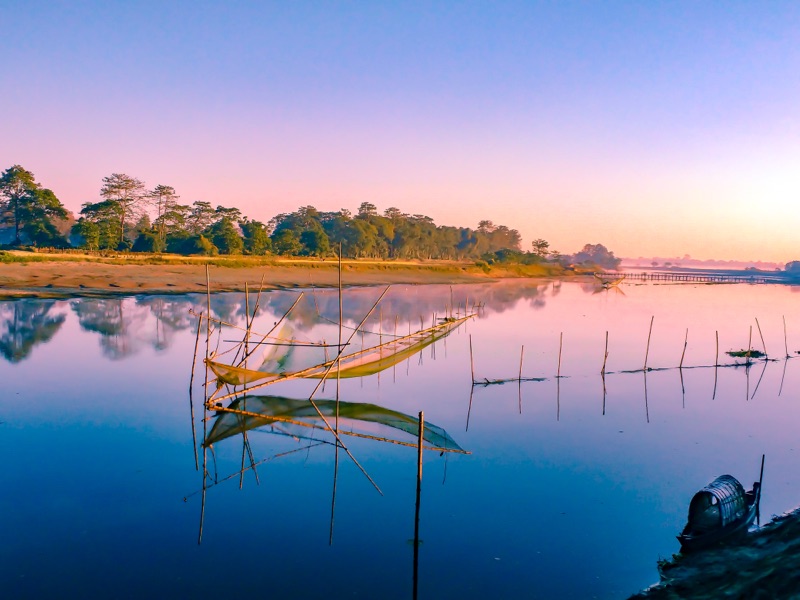
Majuli is a cultural island in every sense. Nestled in the Brahmaputra river near Jorhat, this 352-square-kilometre island is the cradle of Assamese neo-Vaishnavite culture. Its 22 remaining satras (monasteries) are living institutions where monks preserve classical Satriya dance, theatre, and mask-making traditions dating back to the 15th century. Ferries run from Nimati Ghat in Jorhat (about 1 hour), and the island is best explored by bicycle or rented scooter over 2 days. Majuli is on UNESCO's tentative list and is gradually shrinking due to river erosion, making a visit all the more urgent.
3. Kamakhya Temple, Guwahati
Perched atop Nilachal Hill, Kamakhya is one of the 51 Shakti Peethas and among the most revered tantric temples in India. The temple complex includes smaller shrines to ten Mahavidya goddesses. The annual Ambubachi Mela (typically late June) draws hundreds of thousands of pilgrims and tantric practitioners. Even outside the festival, the hilltop offers sweeping views of the Brahmaputra and Guwahati city below. Plan your visit early in the morning to avoid queues that can stretch to several hours on weekends.
4. Sivasagar (Sibsagar)
Sivasagar was the capital of the Ahom dynasty, which ruled Assam for an extraordinary 600 years. The town is dotted with massive Ahom-era structures: Rang Ghar (considered Asia's oldest amphitheatre), Talatal Ghar (a seven-storey palace with underground tunnels), and Kareng Ghar (the royal palace). The trio of man-made tanks — Sivasagar, Joysagar, and Gaurisagar — each flanked by ornate temples, remain among the finest examples of Ahom architecture and engineering.
5. Manas National Park
Another UNESCO World Heritage Site, Manas sits at the foothills of the Bhutan Himalayas and combines Project Tiger, Project Elephant, and a biosphere reserve in one park. It is home to the endangered golden langur, pygmy hog, and Assam roofed turtle. Manas sees far fewer tourists than Kaziranga, which means quieter safaris, better elephant sightings, and genuine wilderness immersion. The Mathanguri forest camp on the Manas River is one of the most atmospheric jungle stays in all of India.
6. Hajo
Located 32 km from Guwahati, Hajo is a rare pilgrimage site sacred to Hindus, Muslims, and Buddhists alike. The Hayagriva Madhava Temple sits atop Monikut Hill and is believed by some Buddhists to be where the Buddha attained nirvana. Nearby, the Poa Mecca mosque (built around 1657) is venerated as a quarter-pilgrimage to Mecca. Hajo makes for a wonderful half-day trip from Guwahati.
7. Tezpur
Known as the cultural capital of Assam, Tezpur sits on the north bank of the Brahmaputra with the Eastern Himalayan foothills as a backdrop. Key attractions include the ruins of Da Parbatia (a 6th-century doorframe, one of the earliest examples of stone sculpture in Assam), Agnigarh Hill (linked to the legend of Usha and Aniruddha from the Mahabharata), and Nameri National Park for river rafting on the Jia Bharali. Tezpur also serves as the jumping-off point for road trips to Tawang in Arunachal Pradesh.
Best Time to Visit Assam
The ideal window for an Assam trip falls between November and April. This dry season offers clear skies, comfortable temperatures (15–28°C), and — crucially — it coincides with the Kaziranga National Park open season. The park closes every year from May through October due to monsoon flooding of the Brahmaputra.
- November – February: Peak season. Cool and dry. Best for Kaziranga safaris and birdwatching. Morning fog adds atmosphere to elephant-back safaris. Pack layers for early-morning game drives (8–12°C).
- March – April: Warming up (25–32°C) but still good. Rongali Bihu (mid-April) is the Assamese New Year — the state's biggest festival with traditional dance, feasting, and village celebrations. Kaziranga remains open until late April.
- May – September: Monsoon. Heavy rains. Kaziranga and Manas are closed. Guwahati and Majuli are accessible but expect downpours. Only recommended if you want to witness the raw power of monsoon on the Brahmaputra or attend the Ambubachi Mela at Kamakhya (late June).
- October: Post-monsoon transition. Greenery is at its peak. Kaziranga typically reopens in the last week of October or first week of November (exact date varies yearly).
How to Reach Assam
By Air
Lokpriya Gopinath Bordoloi International Airport (GAU) in Guwahati is the northeast's largest and best-connected airport. Direct flights operate from Delhi, Mumbai, Kolkata, Bangalore, Chennai, and Hyderabad on airlines including IndiGo, Air India, SpiceJet, and Vistara. Flight time from Delhi is approximately 2 hours 40 minutes. Jorhat airport (JRH) has limited connections and is useful if heading directly to Majuli or upper Assam.
By Train
Assam has the best rail connectivity in the northeast. Guwahati Junction is the primary railhead. The Rajdhani Express from New Delhi takes about 26 hours. The Kamrup Express and Northeast Express are other popular options. For Kaziranga, the nearest station is Furkating (75 km) on the main Guwahati–Dibrugarh line. Jorhat Town station serves Majuli-bound travellers.
By Road
NH-27 (previously NH-37) runs along the entire length of the Brahmaputra Valley and connects Guwahati to Kaziranga (about 230 km, 5 hours), Jorhat (315 km, 6–7 hours), and Sivasagar (370 km, 7–8 hours). Roads are generally well-maintained on this trunk route. Private cabs from Guwahati to Kaziranga cost around INR 4,000–5,000 one way. State transport (ASTC) buses are cheap but slow.
Kaziranga Safari Guide — Zones, Timings & Booking Tips
A Kaziranga safari is the highlight of any Assam tour package. Here is everything you need to know to plan your game drives.
Safari Zones
| Zone | Also Known As | Best For |
|---|---|---|
| Central Range | Kohora | One-horned rhinos, elephant safari (only zone offering it) |
| Western Range | Bagori | Rhinos at close range, best overall for first-timers |
| Eastern Range | Agoratoli | Birdwatching, scenic wetlands, wild buffalo herds |
| Burapahar Range | Ghorakati | Hilly terrain, wild elephants, tiger sightings |
Safari Timings (2025–2026 Season)
- Jeep Safari (Morning): 7:30 AM – 10:00 AM
- Jeep Safari (Afternoon): 1:30 PM – 3:30 PM
- Elephant Safari (Kohora only): 5:30 AM – 6:30 AM (extremely limited slots, first come first served)
How to Book
Jeep safaris are booked through the official Kaziranga National Park website or at the park's tourism office in Kohora. Booking opens about a month in advance for the upcoming season. During peak season (December–February), slots — especially at Kohora and Bagori — sell out days ahead. Book online at least a week in advance. Elephant safari slots cannot be pre-booked online; you must arrive at the park gate before 5:00 AM and purchase tickets on a first-come basis.
Jeep vs Elephant Safari
Jeep safaris cover more ground and last about 2–2.5 hours. They are the best way to see a wide range of wildlife across the park's diverse habitats. Elephant safaris last about an hour and take you through the tall grasslands where jeeps cannot go, offering incredibly close encounters with rhinos. If possible, do both: an elephant safari at dawn followed by a jeep safari in the morning or afternoon.
Where to Stay in Assam
Guwahati
Guwahati has accommodation for every budget. Paltan Bazaar area near the railway station offers budget hotels from INR 800–1,500 per night. Mid-range options along GS Road and Ganeshguri run INR 2,000–4,000. For a premium stay, Vivanta Guwahati and Radisson Blu are the top picks at INR 5,000–8,000. If you prefer a quieter setting, homestays in North Guwahati across the river offer Brahmaputra views at budget prices.
Kaziranga
Most accommodation lines NH-37 near Kohora, within 1–5 km of the park entrance. Options range from budget lodges (INR 1,000–2,000) to excellent mid-range resorts like Jupuri Ghar and Wild Grass Lodge (INR 3,000–5,000) that offer traditional Assamese architecture and organic food. At the luxury end, Diphlu River Lodge (from INR 12,000+) is a boutique eco-lodge on the banks of the Diphlu River with private sit-outs overlooking the forest. Many resorts arrange safaris directly, which simplifies logistics.
Majuli
Accommodation on Majuli is basic but charming. La Maison de Ananda is the most popular choice — a well-run bamboo cottage setup with good food and bicycle rentals. Simple guesthouses near Kamalabari ferry ghat start from INR 600. Homestays offer the most authentic experience and are increasingly available through local tourism cooperatives.
Sivasagar
Hotels in Sivasagar are functional rather than fancy. The town has adequate mid-range options (INR 1,200–2,500) near the Sivasagar Tank and along AT Road. Most visitors treat it as a day trip from Jorhat or an overnight stop between Kaziranga and upper Assam.
Permits & Entry Requirements
Assam requires no Inner Line Permit (ILP) and no Protected Area Permit (PAP) for any traveller — Indian or foreign. This makes it the most accessible state in the northeast. You can fly into Guwahati and start exploring immediately, unlike neighbouring Arunachal Pradesh, Nagaland, or Mizoram where permits are mandatory.
The only permits needed are park entry tickets for national parks:
- Kaziranga NP: Entry fee INR 100 (Indians), INR 650 (foreigners). Jeep hire costs INR 3,500–4,000 per vehicle (up to 6 passengers). Camera fee is INR 500 (still) and INR 500 (video).
- Manas NP: Entry fee INR 50 (Indians), INR 500 (foreigners). Jeep hire around INR 3,000.
If your Assam trip includes a side-trip into Arunachal Pradesh (for example, Tawang via Tezpur), remember that ILP is mandatory. Check our complete permits guide for details on applying online.
Assam Trip Budget & Costs (2026)
Assam is one of the most affordable travel destinations in India. Here is a realistic daily budget breakdown per person for a week-long trip covering Guwahati, Kaziranga, and Majuli:
| Category | Budget | Mid-Range | Comfort |
|---|---|---|---|
| Accommodation (per night) | INR 600 – 1,200 | INR 2,000 – 4,000 | INR 5,000 – 12,000 |
| Meals (per day) | INR 400 – 600 | INR 800 – 1,200 | INR 1,500 – 2,500 |
| Transport (per day) | INR 300 – 500 | INR 800 – 1,500 | INR 2,000 – 3,500 |
| Kaziranga Jeep Safari | INR 3,500 – 4,000 per jeep (split 4–6 people) | ||
| 7-day total (approx.) | INR 12,000 – 18,000 | INR 30,000 – 45,000 | INR 65,000 – 1,00,000 |
Prices are per person and exclude flights to Guwahati. Budget tier assumes shared rooms and public transport. Mid-range includes private cabs and resort stays near Kaziranga.
For a comprehensive breakdown of northeast travel costs, see our Northeast India Budget Guide.
Assamese Food & Cuisine
Assamese cuisine is one of the most distinct in India. Built around rice and freshwater fish, it uses minimal oil and spice, relying instead on fermented ingredients, mustard, and an extraordinary range of herbs and greens. Here are the dishes you absolutely must try:
Must-Try Dishes
- Assamese Thali: The classic meal — rice at the centre, surrounded by dal, a fish curry (masor tenga), a vegetable dish, a bhaji (greens), and khaar (an alkaline preparation made from dried banana peel ash). Simple, balanced, and deeply flavourful.
- Masor Tenga: The quintessential Assamese sour fish curry, cooked with tomatoes, lemon, or elephant apple (outenga). This tangy, light curry is comfort food for every Assamese household and the first thing you should order.
- Pitha: Traditional rice cakes, especially popular during Bihu. Varieties include til pitha (sesame-filled), narikol pitha (coconut), and ghila pitha (deep-fried). You will find these in every sweet shop and at street-side stalls during January (Magh Bihu) and April (Rongali Bihu).
- Khar: A unique Assamese preparation where raw papaya or pulses are cooked with khar (water filtered through dried banana peel ash). It acts as an appetizer and digestive — you won't find anything like it elsewhere in India.
- Duck with Kumura (Ash Gourd): A slow-cooked speciality of upper Assam, rich and hearty, typically served during celebrations and Bihu feasts.
- Assam Tea: No visit is complete without drinking tea at its source. Visit a tea estate near Jorhat or Dibrugarh and taste single-estate orthodox tea that is exported worldwide. Many estates in the Jorhat-Sivasagar belt offer guided tours and tasting sessions.
Where to Eat
In Guwahati, Paradise Restaurant (Paltan Bazaar) and Khorika (GNB Road) serve excellent Assamese thalis. Near Kaziranga, most resorts serve traditional meals. On Majuli, meals at guesthouses offer home-style Assamese cooking at its most authentic. For street food, Guwahati's Fancy Bazaar and Uzan Bazaar areas are packed with stalls serving pitha, chaat, and chai.
Essential Travel Tips for Assam
- Book Kaziranga safaris early. Peak-season slots (December–February) sell out a week in advance, especially for the popular Central and Western ranges.
- Carry warm layers for early-morning safaris. Temperatures drop to 8–12°C in the open-top jeeps during winter mornings. A fleece and a windbreaker are essential.
- Wear neutral colours on safari. Bright clothing can disturb animals. Olive, khaki, brown, and grey work best.
- Allow 2 days minimum for Kaziranga, 2 for Majuli. Rushing either defeats the purpose. These are experiences meant to be savoured at the pace of nature and village life.
- Check ferry schedules for Majuli. Ferries from Nimati Ghat (Jorhat) to Kamalabari (Majuli) typically run 3–4 times a day. The first ferry departs around 10:00 AM and the last by 3:00 PM. Timings shift seasonally and depend on river conditions.
- ATMs are scarce outside cities. Carry enough cash for Majuli and Kaziranga. UPI works at most resorts but not at all small shops or ferries.
- Assam has excellent mobile connectivity on the main corridor. Airtel and Jio work reliably from Guwahati to Jorhat. Inside Kaziranga park, expect patchy coverage.
- Respect the wildlife. Maintain safe distance, keep vehicle noise down, and follow your guide's instructions at all times inside national parks.
- Try a Brahmaputra river cruise. Sunset boat rides from Guwahati's Fancy Bazaar ghat offer stunning views of the river, the city skyline, and the hills beyond. Longer multi-day cruises (Guwahati to Jorhat) are a luxury option worth exploring.
- Combine Assam with Meghalaya. Shillong is only 100 km (3 hours) from Guwahati. A combined Assam + Meghalaya trip of 10–12 days is the most popular northeast India tour circuit.
Ready to Explore Assam?
Get our free 2026 Northeast India Travel Guide with packing lists, budget templates, and safari booking links delivered to your inbox.
Get Free Guide →