Why Meghalaya? The Crown Jewel of Northeast India
Meghalaya ruined every other destination for me. After 5 days in the Abode of Clouds, nowhere else quite compares.
I am not being dramatic. I have hiked through Himachal, road-tripped Rajasthan, and spent lazy weeks in Goa. None of it prepared me for the moment I looked down from a suspension bridge at Dawki and saw a boat hovering above the riverbed like a magic trick. Or the afternoon I stood at the edge of Nohkalikai Falls, 340 metres of white water plunging into a turquoise pool, and genuinely could not feel my legs.
Meghalaya is the kind of place that makes you angry nobody told you about it sooner. Rivers so clear they look photoshopped. Living root bridges that indigenous Khasi communities have literally grown over centuries. Waterfalls around every corner. And rain — so much rain that two villages here hold the world record for wettest places on Earth. Yet somehow, it stays blissfully uncrowded while the rest of India's tourist spots drown in selfie sticks.
Five days is the sweet spot for Meghalaya. Any less and you will rush. Any more and you can add the Jaintia Hills or Tura — but for a first trip, this itinerary covers everything that matters.
This is the exact itinerary I followed, refined after talking to dozens of local guides and fellow travellers. It covers Shillong, Cherrapunji (Sohra), the Double Decker Living Root Bridge, Mawlynnong, and Dawki — with honest opinions on where to stay, what to eat (the pork here is life-changing), and a real budget breakdown.
If you are planning a bigger Northeast India trip, start here. Meghalaya is the easiest state to fall in love with, and it will make you want to keep going.
Getting to Meghalaya
Here is the slightly annoying part: Meghalaya does not have its own commercial airport (one is being built near Shillong, but do not hold your breath). You fly into Guwahati Airport (GAU) in Assam. IndiGo and SpiceJet run regular flights from Delhi, Mumbai, Kolkata, and Bangalore. I have snagged one-way fares for under 4,000 INR by booking 3 weeks out.
Guwahati to Shillong (96 km, approximately 3 hours)
The drive from Guwahati to Shillong is gorgeous — one of the best airport transfers I have ever experienced. You have three options:
- Private taxi (2,500-3,500 INR): My recommendation. Pre-book through your hotel or Savaari. Three hours, comfortable, and you can stop for photos at Umiam Lake on the way.
- Shared Sumo (400-600 INR/person): Departs from Paltan Bazaar in Guwahati city. Cramped? Yes. But cheap, safe, and you will meet interesting people. They leave when full, usually every 30-45 minutes.
- State bus (200-300 INR): Cheapest option from the ISBT. Slower (4-5 hours) and not great if you land late.
Do not book a late-evening flight thinking you will drive to Shillong that night. The road has no street lights for long stretches and the mountain curves are no joke in the dark. If your flight lands after 3 PM, stay overnight in Guwahati and leave fresh in the morning.
For detailed costs of all transport options across Northeast India, check our Northeast India Budget Guide.
The Complete 5-Day Meghalaya Itinerary
This route is a loop — Shillong south to Cherrapunji, east to Mawlynnong and Dawki, then back to Guwahati. Zero backtracking, maximum time at each spot. I hired a car with driver for all 5 days (around 13,000 INR total) and it was worth every rupee. You can also arrange daily taxis, but honestly, having the same driver who knows the roads is a game-changer.
Day 1: Arrive Guwahati → Shillong
Distance: 96 km | Drive time: ~3 hours | Overnight: Shillong
I landed at Guwahati around 10 AM and my driver was already waiting with a cardboard sign. From the moment we left the flat Assam plains and started climbing into the Khasi Hills, I knew this trip was going to be different. Pine forests, mist curling through valleys, and then suddenly — Umiam Lake. We stopped for 15 minutes. The lake surrounded by green hills in morning light was the first of many moments where I just stood there, mouth open.
You will reach Shillong by early afternoon. Check in, freshen up, and save your energy for the evening.
Evening: Explore Police Bazaar
Police Bazaar is chaotic, loud, and absolutely perfect for a first evening. I wandered through shops selling Khasi shawls and bamboo crafts, then parked myself at Dylan's Cafe for dinner. The vibe is great — live music some nights, good coffee, decent food. If you want something more local, City Hut Dhaba does a solid Khasi rice-and-pork thali that I went back to twice.
Skip the hotel restaurant on Night 1 and eat at the street momo stalls near Bara Bazaar. Pork momos for 50 INR a plate, steaming hot, and honestly better than anything I found at fancier places. This is where the locals eat.
Where to stay in Shillong: Budget guesthouses from 800 INR, mid-range hotels 2,000-4,000 INR. Check Booking.com for deals — online rates beat walk-in prices, especially during peak season (October to December).
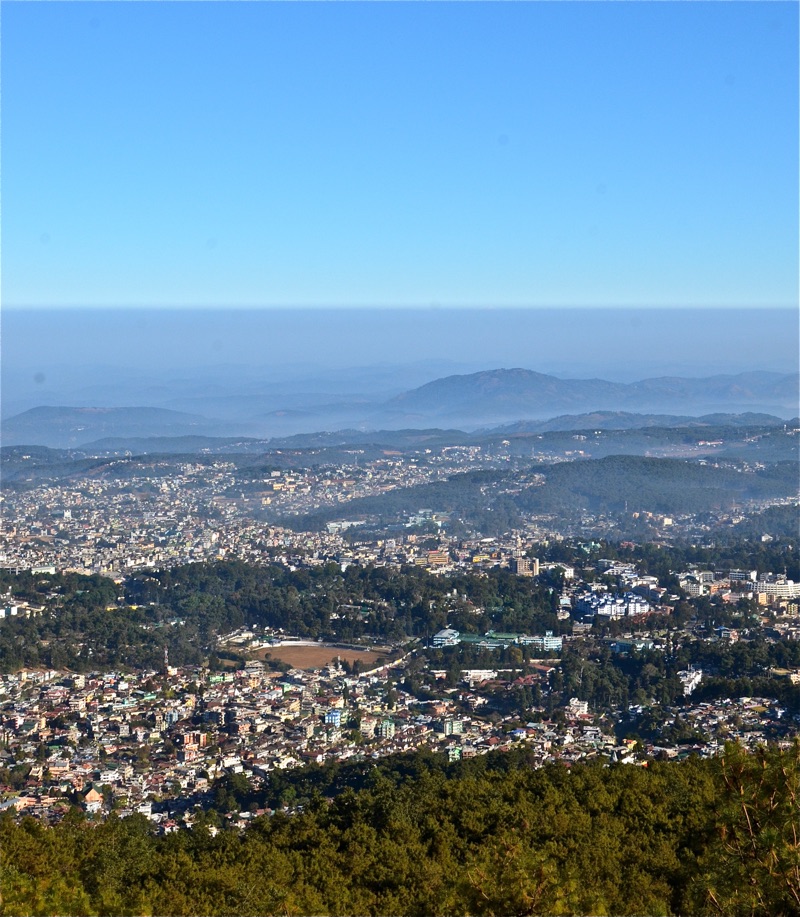
Day 2: Shillong Sightseeing
Highlights: Elephant Falls, Shillong Peak, Don Bosco Museum, Ward's Lake | Overnight: Shillong
Day 2 is your easy day. No long drives, no 3,500-step treks (that comes later). Hire a local taxi for the full day — about 1,500-2,000 INR — and take Shillong at a relaxed pace.
Morning stops
Elephant Falls is pretty but honestly not the highlight of the trip. It is a nice three-tiered cascade, easy 10-minute walk from the parking area. Get there by 9 AM before the tour groups arrive. The real morning winner is Shillong Peak (1,965 metres) — on clear days, the panoramic views stretch all the way to the Bangladesh plains. I stood up there for 20 minutes just absorbing the scale. Bring your ID — it is an Air Force-managed area and they check at the gate.
Afternoon stops
I almost skipped the Don Bosco Centre for Indigenous Cultures because I am not a museum person. That was nearly a huge mistake. Seven floors documenting the history and traditions of every indigenous community in Northeast India — the tribal costumes, the ceremonial objects, the photography — I stayed two hours and could have stayed longer. Entry is 100 INR for Indians. Do not skip this.
Ward's Lake is a pleasant 30-minute break afterward — flower beds, an ornamental bridge, peaceful vibes. Nothing earth-shattering, but a nice cooldown. Entry is 30 INR.
Evening: Cafe Culture
Shillong calls itself the live-music capital of India, and the cafe scene backs it up. I spent my evening hopping between Cafe Shillong (great local cake and filter coffee) and ML 05 Cafe (slightly fancier, good cocktails). On weekends you can catch live bands playing everything from Khasi folk to rock covers. The energy is infectious.
For the best food experience in Shillong, skip the tourist restaurants and head to Bara Bazaar early morning. The indigenous Khasi market has smoked meats, seasonal fruits, and Kwai (betel nut) preparations you will not find anywhere else. It is the real Shillong.
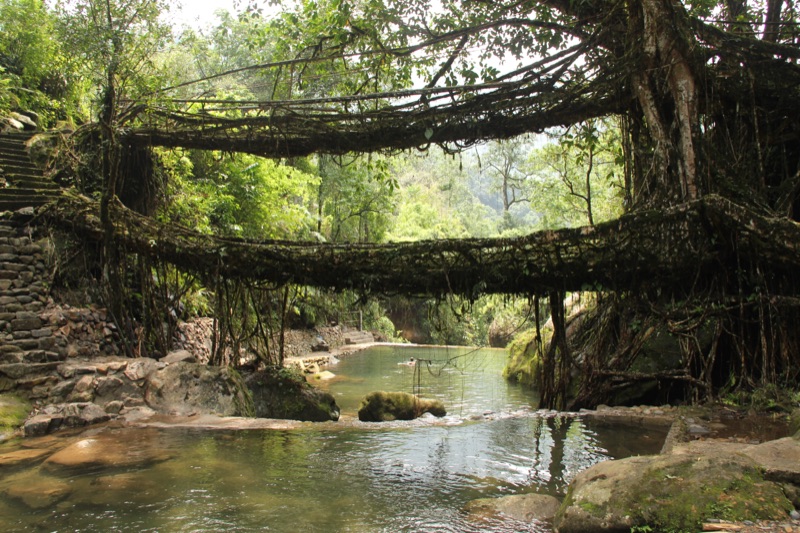
Day 3: Shillong → Cherrapunji (Sohra)
Distance: 54 km | Drive time: ~2 hours | Overnight: Cherrapunji
This is the day that made me fall in love with Meghalaya. The 54 km drive from Shillong to Cherrapunji is only two hours, but I wanted to stop every five minutes. The road drops into deep valleys, cuts through cloud forests, and at one point passes a viewpoint where I could see three separate gorges at once. My driver just laughed at me fumbling with my camera.
Morning: Nohkalikai Falls
Make Nohkalikai Falls your first stop and get there early. This is the tallest plunge waterfall in India — 340 metres of water crashing into a turquoise pool that looks like someone spilled paint into the gorge. I have seen a lot of waterfalls. This one made my stomach drop. No photo does it justice. The viewing platform sits right at the edge, and the scale is genuinely dizzying. Entry is 30 INR.
Do not drive to Cherrapunji after dark. The roads have no barriers on the cliff side and the drops are terrifying. I watched a bus nearly miss a turn one evening and it cured me of any desire for night driving in Meghalaya.
Midday: Mawsmai Cave & Seven Sisters Falls
Mawsmai Cave is a quick 150-metre walk-through limestone cave. Honestly, it is fine — nothing mind-blowing, but it gives you a taste of the massive cave systems under Meghalaya (including Krem Liat Prah, over 34 km long). The kids in our group loved it. Seven Sisters Falls is seasonal — spectacular during monsoon when all seven streams are flowing, a bit underwhelming in dry season. Manage expectations.
Afternoon: Eco Park & Thangkharang Park
The Cherrapunji Eco Park has a viewpoint that stopped me cold. On a clear day, you can see the patchwork of Bangladeshi farmland stretching to the horizon. I sat on the bench there for half an hour just watching clouds move across the valley. Thangkharang Park is similar but adds a view of Kynrem Falls from above — worth the stop if you have time.
Pack a rain jacket even in December. I got caught in a sudden downpour at Eco Park on a day that started with blue skies. Cherrapunji earned its reputation as the wettest place on Earth for a reason. Umbrellas are useless in the wind — you need a proper jacket.
Where to stay in Cherrapunji: Fewer options than Shillong but improving fast. Budget homestays from 1,000 INR, mid-range resorts 2,500-4,000 INR. I stayed at Cherrapunjee Holiday Resort and the valley-view room was absolutely worth the upgrade. Check Booking.com for off-peak discounts.
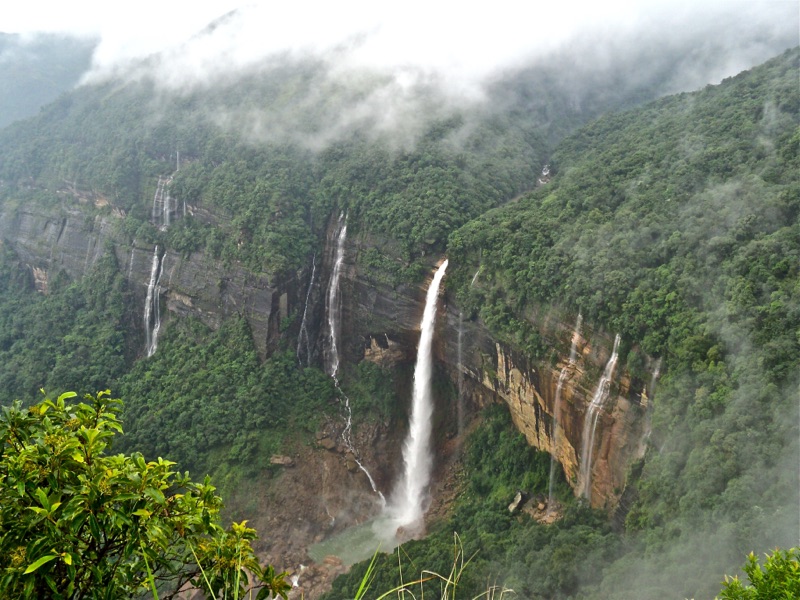
Day 4: Living Root Bridge & Mawlynnong
Highlights: Double Decker Living Root Bridge, Mawlynnong Village, Dawki | Overnight: Dawki
Day 4 was the hardest day of my trip — 3,500 steps down to the root bridge nearly broke my knees — but also the most rewarding. This is why you came to Meghalaya. Wake up by 6 AM and head to Tyrna village.
Morning: Double Decker Living Root Bridge (Nongriat)
Let me be honest: those 3,500 steps down are relentless. My legs were shaking by step 2,000. The trail is well-maintained with concrete and stone steps, but steep does not begin to describe it. Allow 1.5-2 hours down and 2-2.5 hours back up.
But then you see it. The Double Decker Living Root Bridge — two tiers of living rubber fig roots spanning a river, grown and shaped by Khasi hands over more than 100 years. I stood on the lower deck with water rushing below me and tangled roots forming a canopy above, and I had one of those rare travel moments where everything else disappears. This is unlike anything you have seen anywhere on Earth.
There is a natural swimming pool near the bridge — I jumped in fully clothed because I was drenched in sweat anyway. Cold, crystal-clear water. Perfect.
Do not attempt this trek in flip-flops or formal shoes. I watched a guy in leather sandals turn back after 500 steps. You need proper trekking shoes with grip. The steps get slippery, especially in the shade. Carry 2 litres of water minimum and some energy bars.
Fitness note: You do not need to be a mountain athlete, but you need basic fitness. If you have knee problems, bring trekking poles — they saved a fellow hiker in our group. Budget extra time for the climb back up. It is harder than you think.
Afternoon: Mawlynnong — Asia's Cleanest Village
After the root bridge trek, drive to Mawlynnong. I was skeptical of the whole "Asia's Cleanest Village" tag — figured it was marketing. I was wrong. Bamboo dustbins on every path, flowering gardens, zero plastic. The pride this Khasi community takes in their village is palpable and genuinely moving.
Climb the sky walk — a bamboo platform in a giant fig tree. It sways, which is terrifying, but the views over the forest and down toward Bangladesh are spectacular. Small donation of 20-50 INR supports the village.
Evening: Drive to Dawki
Forty-five minutes from Mawlynnong, you reach Dawki on the Bangladesh border. I arrived just in time for sunset over the Umngot River and it was one of those golden-hour moments you remember forever. The riverside camps are basic — tents right beside the water, communal dining, bonfires at night — but the setting is magical. Expect 1,200-2,500 INR per person including meals.
Book your Dawki camp at least 2 weeks in advance during peak season (October-March). There are limited tents and they sell out, especially on weekends. I nearly got stuck without a booking during Diwali week.
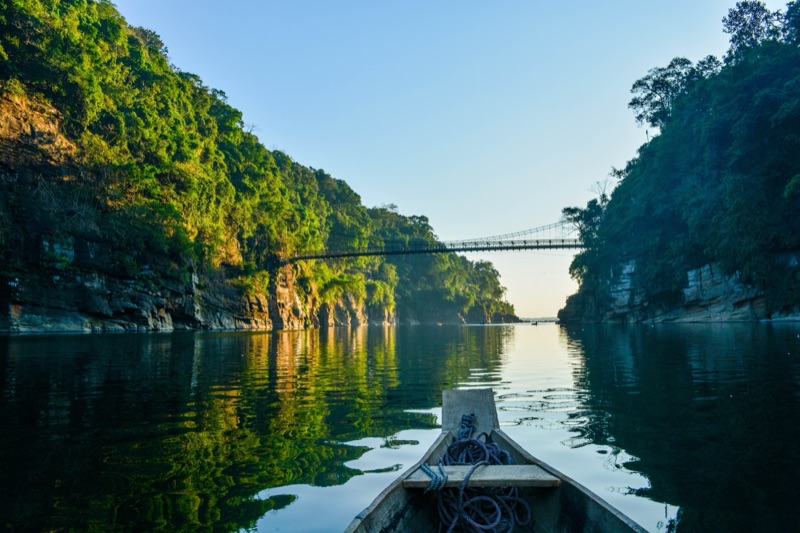
Day 5: Dawki → Guwahati (Departure)
Distance: ~200 km | Drive time: ~5 hours | Departure: Guwahati
Morning: Umngot River Boat Ride
This is THE moment. The one that will make your friends back home lose their minds. I woke up at 6:30 AM, walked to the river in the morning chill, and climbed into a wooden boat on the Umngot River. The water was so impossibly clear that the boat appeared to hover in mid-air. My shadow was sharper on the riverbed than it was on the boat itself. I am not exaggerating — this is the most visually stunning thing I have ever seen while travelling.
Take the morning boat at Dawki before 8 AM. By 10 AM it is crowded and the water gets churned up by other boats. Early morning gives you mirror-still water, the best light, and the clearest visibility. Ask your boatman to take you to the deepest section for the most dramatic photos.
Boat rides cost 600-1,000 INR per boat (shared between 2-4 people) for 30-45 minutes. After the boat ride, grab breakfast at one of the small shacks near the river — basic but freshly cooked Maggi and omelettes that hit differently after a morning on the water.
Then begins the 5-hour drive back to Guwahati via Shillong. Stop for lunch in Shillong — I grabbed one last plate of jadoh (Khasi pork rice) before saying goodbye to Meghalaya with a heavy heart.
Do not book a morning or early afternoon flight from Guwahati. The Dawki-to-Guwahati drive is 5 hours minimum, more on weekends. Book a 6 PM or later flight and give yourself breathing room. I have heard too many stories of missed flights.
Ready to Plan Your Meghalaya Trip?
Compare Meghalaya tour packages across top platforms. Find the best deals for your dates and group size.
Compare Meghalaya PackagesOr subscribe free to get our exclusive Meghalaya planning checklist by email.
Where to Stay in Meghalaya
Accommodation options across Meghalaya have expanded significantly in recent years. Here is a breakdown by budget level for each major stop on this itinerary.
Shillong (Days 1 & 2)
- Budget (800 – 1,500 INR/night): Guesthouses and hostels around Police Bazaar. Basic but clean rooms with hot water and WiFi. Backpackers will find several dorm options in the 400 to 600 INR range as well.
- Mid-range (2,000 – 4,000 INR/night): Well-reviewed hotels with comfortable rooms, room service, and good locations. Options like Hotel Polo Towers, Hotel Centre Point, and several newer boutique properties offer solid value.
- Luxury (5,000+ INR/night): Ri Kynjai at Umiam Lake is the standout luxury property near Shillong. Heritage properties and premium resorts with lake or valley views start from around 5,000 to 8,000 INR per night.
Cherrapunji (Day 3)
- Budget (1,000 – 1,500 INR/night): Homestays run by local Khasi families. Simple rooms with home-cooked meals included. A great way to experience local culture.
- Mid-range (2,500 – 4,000 INR/night): Cherrapunjee Holiday Resort and similar properties offer comfortable cottages with valley views, attached bathrooms, and restaurant facilities.
- Luxury (5,000+ INR/night): A handful of boutique resorts with premium amenities have opened in recent years. Expect heated rooms, organic dining, and guided experiences.
Dawki (Day 4)
- Budget (800 – 1,200 INR/night): Basic riverside tent camps with shared facilities. Meals are usually included. The experience itself — sleeping beside the Umngot River — is the real draw.
- Mid-range (2,000 – 3,500 INR/night): Better-equipped camps with attached bathrooms, thicker mattresses, and more privacy. Some offer cottage-style rooms.
- Luxury (5,000+ INR/night): Limited options, but a few premium glamping setups have started appearing, especially from October to March.
Booking tip: Check Booking.com for verified reviews and best-rate guarantees. During peak season (October to December), book at least 2 to 3 weeks in advance, especially for Dawki camps and popular Cherrapunji properties.
For a comprehensive cost breakdown of accommodation across the entire Northeast, read our Northeast India Budget Guide.
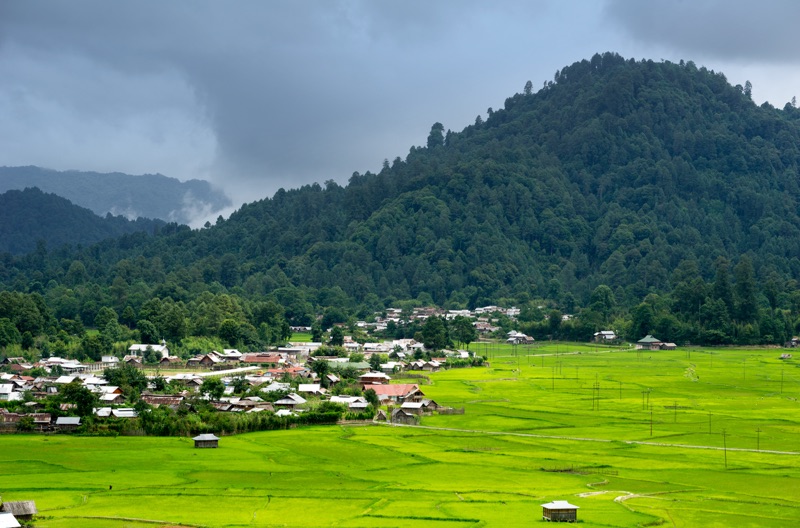
What to Eat in Meghalaya
I need to talk about the food, because nobody warned me how good it would be. Khasi cuisine is rice, pork, fish, and fermented everything — hearty, bold, and completely different from anything else in India. My taste buds were unprepared.
Must-Try Dishes
- Jadoh: The dish I dream about at home. Red rice cooked with pork, turmeric, and local spices. Rich, fragrant, deeply satisfying. I ate this at least once a day. 80-150 INR a plate at any local restaurant in Shillong or Cherrapunji.
- Tungrymbai: Fermented soybeans slow-cooked with sesame and ginger. The smell is intense but the umami flavour is incredible. Give it a chance — it grew on me by day 2.
- Doh Khleh: Cold pork salad with raw onions, chillies, and herbs. Sounds odd, tastes amazing. Like a Khasi ceviche for meat lovers.
- Nakham Bitchi: Dried fish chutney that will clear your sinuses. Not for the timid, but if you want the full Khasi experience, you have to try it.
- Doh Neiiong: Pork in black sesame paste. The richest, most distinctive dish I ate in all of Northeast India. Order this once.
Street Food Guide
The Shillong street food scene is brilliant. Bara Bazaar in the morning for smoked meats and seasonal fruits is an experience in itself — I spent 200 INR and felt like I had eaten a feast. Police Bazaar momo stalls at night (30-60 INR a plate) are the real deal. And do not miss Khasi putharo (steamed rice bread) at local tea stalls with black tea. Simple, slightly sweet, and ridiculously comforting.
If you are vegetarian, tell your hotel in Cherrapunji and Dawki at least a day in advance. Meghalaya is a meat-heavy culture and smaller places may not have veg options ready. In Shillong you will be fine — most restaurants have a vegetarian section. Egg dishes are available everywhere.
Meghalaya 5-Day Budget Breakdown (Per Person)
Here is a realistic cost estimate for the 5-day itinerary. All figures are per person and assume double sharing for accommodation. Costs are in Indian Rupees (INR).
| Category | Budget | Mid-Range | Luxury |
|---|---|---|---|
| Accommodation (4 nights) | 3,500 – 5,000 | 8,000 – 14,000 | 20,000 – 30,000 |
| Transport (shared/car hire) | 2,500 – 3,500 | 6,000 – 7,500 | 7,500 – 10,000 |
| Food & Drinks | 2,500 – 3,000 | 4,000 – 5,500 | 6,000 – 8,000 |
| Entry Fees & Activities | 500 – 800 | 800 – 1,200 | 1,200 – 2,000 |
| Dawki Boat Ride | 300 – 500 | 300 – 500 | 500 – 1,000 |
| Miscellaneous & Tips | 700 – 1,200 | 1,500 – 2,000 | 2,500 – 4,000 |
| Total (5 Days) | 12,000 – 15,000 | 25,000 – 30,000 | 45,000+ |
Note: Flights to Guwahati are not included. Round-trip domestic flights typically cost 5,000 to 12,000 INR depending on your departure city and how far in advance you book. For a full breakdown of Northeast India travel costs, read our complete budget guide.
Essential Travel Tips for Meghalaya
Meghalaya is one of the most rewarding destinations in India, but a little preparation goes a long way. Here are the tips that will make your trip significantly smoother.
- Carry rain gear year-round. Meghalaya is called the "Abode of Clouds" for a reason. Even outside the monsoon season, sudden showers are common. Pack a lightweight waterproof jacket and a dry bag for your electronics. Umbrellas are less useful on windy mountain trails.
- Carry sufficient cash. ATMs exist in Shillong and Cherrapunji town, but they are unreliable in smaller areas like Nongriat, Mawlynnong, and Dawki. UPI payments work at some hotels and restaurants but not everywhere. Withdraw enough cash in Shillong to last the remainder of the trip. A good rule of thumb: carry at least 5,000 to 8,000 INR in cash beyond what you plan to pay by card.
- Invest in proper trekking shoes. The Living Root Bridge trek (Day 4) involves 3,500 steps each way on uneven, sometimes slippery terrain. Sports shoes with good grip are the minimum. Dedicated trekking shoes with ankle support are ideal. Do not attempt this trek in flip-flops, sandals, or formal shoes.
- Start your days early. Morning hours offer the best weather (fewer clouds), the best light for photography, and the smallest crowds. This is especially important for Nohkalikai Falls and Dawki boat rides, where visibility deteriorates as the day progresses.
- Book Dawki camps in advance during peak season. October to March is high season, and the limited number of Dawki riverside camps means they fill up quickly. Book at least 2 weeks in advance for weekends and holidays. During Diwali week and Christmas/New Year, book even earlier.
- Stay hydrated on trek days. Carry at least 2 litres of water for the Living Root Bridge trek. There are a few small shops at Nongriat village, but availability is not guaranteed. Energy bars, bananas, and glucose are smart additions to your daypack.
- Respect local culture. Meghalaya is home to the Khasi, Jaintia, and Garo communities. Ask permission before photographing people. Dress modestly when visiting villages, especially Mawlynnong. Avoid littering — the communities here take environmental cleanliness very seriously.
- Network connectivity is limited. Mobile data works well in Shillong (Jio and Airtel have 4G coverage). In Cherrapunji, coverage is patchy. In Nongriat, Mawlynnong, and Dawki, you may have no signal at all. Download offline maps before the trip and inform your family about potential communication gaps.
- Check permit requirements for foreign nationals. Indian citizens do not need any special permits for Meghalaya. However, foreign nationals visiting Dawki (a border area) may need additional clearance. Check our permit guide for the latest requirements.
- Consider travel insurance. The root bridge trek and outdoor activities carry some inherent risk. A basic travel insurance policy that covers medical emergencies and trip cancellation is a smart investment, especially for adventure-focused itineraries.
Best Time to Visit Meghalaya
The ideal time to visit Meghalaya depends on what experience you are looking for:
- October to March (peak season): The best overall weather. Clear skies, comfortable temperatures (10 to 22 degrees Celsius), and the clearest water at Dawki. This is when the famous transparent-river photos are possible. Expect higher prices and larger crowds, especially during Diwali, Christmas, and New Year.
- April to June (pre-monsoon): Warm and occasionally rainy. Waterfalls start picking up volume. Good for trekking and fewer tourists. Dawki water clarity begins to decrease from May onward.
- July to September (monsoon): Heavy rainfall, especially in Cherrapunji and Mawsynram. Waterfalls are at their most spectacular. Roads can be slippery and occasionally blocked by landslides. Only recommended for experienced travellers who do not mind getting thoroughly wet. The Living Root Bridge trek becomes more challenging.
For a detailed month-by-month breakdown including festival dates and weather data for all eight Northeast states, read our comprehensive Best Time to Visit Northeast India guide.
Start Planning Your Meghalaya Trip
Meghalaya is one of those rare destinations that exceeds expectations. The living root bridges, the crystal-clear rivers of Dawki, the thundering waterfalls of Cherrapunji, the warmth of Khasi hospitality — it all adds up to something genuinely special. Five days is enough to cover the highlights, and this itinerary gives you a practical, day-by-day roadmap to make it happen.
Whether you are a solo backpacker on a 12,000-INR budget or a couple looking for a comfortable 30,000-INR holiday, Meghalaya accommodates every travel style. The key is to book your accommodation early (especially during peak season), carry good rain gear and trekking shoes, and leave enough flexibility in your schedule to simply absorb the beauty of this remarkable state.
If you are planning a broader Northeast India trip, consider combining Meghalaya with Assam and Arunachal Pradesh for a comprehensive 10-to-14-day itinerary. The region rewards those who take the time to explore beyond the obvious.
Compare Meghalaya Tour Packages
Find the best-value packages from top operators. Compare prices, itineraries, and reviews in one place.
Compare Packages NowGet Our Free Meghalaya Planning Checklist
Subscribe to our newsletter and receive a downloadable checklist covering packing, permits, booking timeline, and more.
Subscribe Free