Table of Contents
- Why Northeast India Belongs on Your Bucket List
- Dawki River, Meghalaya
- Living Root Bridges, Meghalaya
- Tawang Monastery, Arunachal Pradesh
- Kaziranga National Park, Assam
- Nathula Pass, Sikkim
- Ziro Valley, Arunachal Pradesh
- Cherrapunji / Sohra, Meghalaya
- Tsomgo Lake, Sikkim
- Dzukou Valley, Nagaland
- Loktak Lake, Manipur
- Majuli Island, Assam
- Sela Pass, Arunachal Pradesh
- Mawlynnong, Meghalaya
- Kohima War Cemetery, Nagaland
- Gurudongmar Lake, Sikkim
- Phawngpui Peak, Mizoram
- Unakoti, Tripura
- Nohkalikai Falls, Meghalaya
- Hornbill Festival, Nagaland
- Double Decker Root Bridge, Meghalaya
- Planning Your Northeast India Visit
Why Northeast India Belongs on Your Bucket List
Tucked between Bhutan, Myanmar, Bangladesh, Tibet, and the narrow Siliguri Corridor that connects it to mainland India, the eight states of Northeast India remain the country's last great frontier of unspoiled nature and living cultures. While the rest of India's tourist trails grow more crowded each season, the Northeast quietly guards cloud forests older than the Himalayas, rivers so transparent that boats appear to float on air, and tribal traditions that have survived unchanged for centuries.
This is a land where a monastery perched at 10,000 feet watches over a valley unchanged since the 17th century. Where indigenous communities have literally grown their infrastructure from the roots of living trees. Where the world's largest river island hosts monks who still craft manuscripts by hand. From the snow-dusted passes of Sikkim and Arunachal Pradesh to the rolling bamboo hills of Mizoram and the wetlands of Manipur, each state offers a radically different landscape, cuisine, and way of life.
Whether you are a seasoned trekker looking for your next Himalayan challenge, a wildlife photographer chasing the one-horned rhinoceros, or a culture enthusiast hungry for festivals that no travel influencer has oversaturated yet, this list has something for you. We have walked every trail, crossed every pass, and slept in every village guesthouse so that you can build the perfect Northeast India itinerary. Here are the 20 places that you absolutely cannot miss.
1. Dawki River, Meghalaya
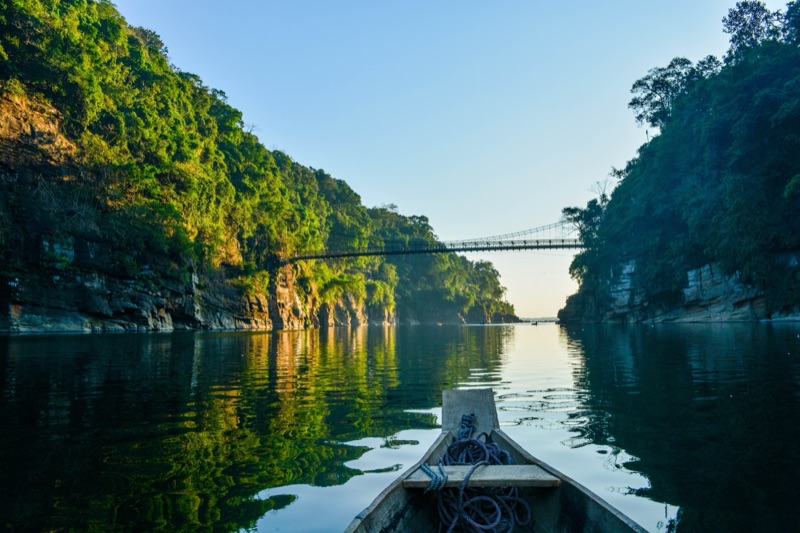
Stand on the suspension bridge over the Umngot River at Dawki and look straight down. The water is so impossibly clear that the colourful wooden boats below appear to levitate above the riverbed. This stretch of the Umngot, right at the Indo-Bangladesh border, has become one of the most photographed spots in all of India, and for good reason. During the dry months between November and April, visibility extends well over 15 feet to the sandy bottom, creating that viral glass-water effect that sends social media into a frenzy every winter. Beyond the boat ride, Dawki is also the gateway to Shnongpdeng, a riverside camp where you can try cliff jumping, snorkelling, and kayaking in some of the cleanest freshwater you will ever touch.
State: Meghalaya
Best Time to Visit: November to April (clearest water)
How to Get There: Drive 2.5 hours south from Shillong via NH6.
Permit Required: No
Pro Tip: Stay overnight at Shnongpdeng village for riverside camping and stargazing — the light pollution is near zero.
2. Living Root Bridges, Meghalaya
Deep in the subtropical forests of the East Khasi Hills, the War-Khasi and War-Jaintia peoples have spent centuries training the aerial roots of the Indian rubber fig tree across rivers and gorges, creating natural suspension bridges that grow stronger with age. Unlike any man-made bridge, these living structures actually get sturdier as the decades pass, with some specimens estimated to be over 500 years old. The most accessible bridges are near Cherrapunji, at Nongriat and Mawlynnong, but dozens more hide in remote valleys that see barely a handful of visitors each year. Walking across one of these root bridges, feeling the living wood flex gently under your feet, is the kind of experience that stays with you long after the trip ends.
State: Meghalaya
Best Time to Visit: October to March (dry trails, comfortable trekking weather)
How to Get There: Reach Cherrapunji from Shillong (2 hours), then hike 3,500 steps down to Nongriat village.
Permit Required: No
Pro Tip: Spend a night at Nongriat so you can see the bridge in the golden morning light without the day-tripper crowds.
3. Tawang Monastery, Arunachal Pradesh
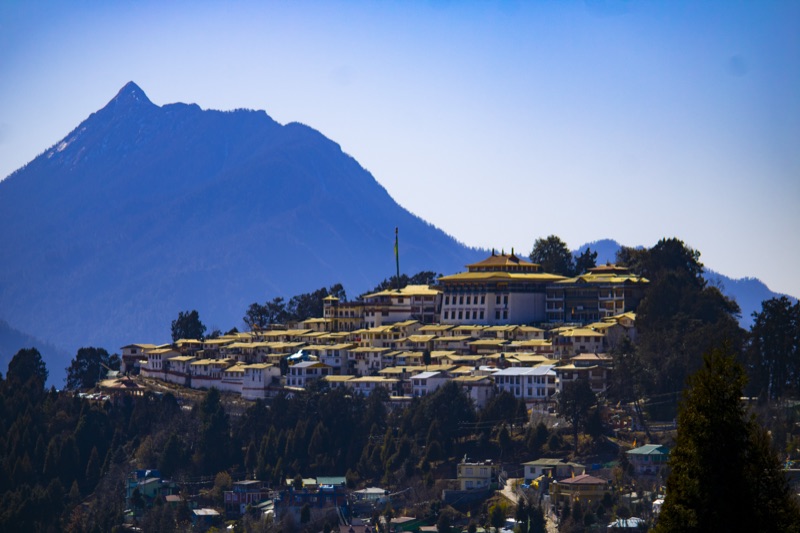
Perched at over 10,000 feet on a ridge overlooking the Tawang Valley, this 17th-century Gelug Buddhist monastery is the largest of its kind in India and the second largest in the world after Lhasa's Potala Palace. Founded in 1680-81 by Merak Lama Lodre Gyatso, the monastery complex houses nearly 450 resident monks, a towering three-storey statue of the Buddha, an irreplaceable library of ancient Tibetan manuscripts, and thangka paintings whose colours remain luminous after centuries. The setting is breathtaking: snow-capped peaks behind, a carpet of green valley below, and the sound of chanting horns drifting through thin mountain air. Tawang is also the birthplace of the 6th Dalai Lama, and the town's cultural connections to Tibet give it a spiritual gravity that you feel the moment you pass through the monastery gate.
State: Arunachal Pradesh
Best Time to Visit: March to June, and September to October
How to Get There: Fly to Guwahati or Tezpur, then drive 2 days via Bomdila and Sela Pass (or take the helicopter service from Guwahati).
Permit Required: Yes — Indian nationals need an Inner Line Permit (ILP); foreigners need a Protected Area Permit (PAP). Get permit details here.
Pro Tip: Time your visit for the Torgya Festival (January) or Losar (February/March) to see masked dances and monastery celebrations.
4. Kaziranga National Park, Assam
This UNESCO World Heritage Site sprawling across the floodplains of the Brahmaputra River is the last great stronghold of the Indian one-horned rhinoceros. Kaziranga shelters roughly two-thirds of the global population of this magnificent creature, and sighting one here — usually munching grass by the roadside with breathtaking nonchalance — is virtually guaranteed. But Kaziranga's biodiversity extends far beyond rhinos. The park is one of the few places on Earth where you can spot the Big Five of Indian wildlife — rhino, elephant, Royal Bengal tiger, Asiatic water buffalo, and swamp deer — all within a single reserve. The elephant-back safaris through shoulder-high grasslands at dawn, with mist rising from the marshes, are among the most atmospheric wildlife experiences anywhere in Asia.
State: Assam
Best Time to Visit: November to April (park closed during monsoon from June to October)
How to Get There: Fly to Guwahati (5-hour drive) or Jorhat (2.5-hour drive); the park entrance is at Kohora on NH37.
Permit Required: No (but safari booking is required in advance)
Pro Tip: Book the Central Range jeep safari for the highest rhino density, and add the Western Range for tigers and elephants.
5. Nathula Pass, Sikkim
At 14,140 feet above sea level, Nathula is one of the highest motorable mountain passes in the world and one of the very few places where you can stand at the India-China border. The pass, part of the ancient Silk Road trade route between Lhasa and the plains of India, was reopened for trade in 2006 after being sealed for 44 years following the 1962 Sino-Indian War. Today, Indian tourists can drive up from Gangtok on a winding road through rhododendron forests and yak pastures to reach the barbed-wire border fence, where Indian and Chinese soldiers stand just metres apart. On clear days, the views of the Chumbi Valley on the Tibetan side are staggering, and the fluttering prayer flags at the summit create a powerful visual against the stark blue sky.
State: Sikkim
Best Time to Visit: May to June, and September to October (closed Mondays and Tuesdays)
How to Get There: 56 km drive from Gangtok (about 4 hours due to altitude and road conditions).
Permit Required: Yes — special Nathula Pass permit required, arranged through registered Gangtok tour operators. Indian nationals only; foreigners not permitted.
Pro Tip: Acclimatise in Gangtok for a day before going to Nathula. Carry warm layers even in summer — temperatures drop to near freezing at the top.
6. Ziro Valley, Arunachal Pradesh
This wide, flat valley ringed by pine-clad hills is home to the Apatani tribe, one of the most fascinating indigenous communities in all of Asia. The Apatani are known for their unique wet rice cultivation system, which UNESCO has placed on its Tentative World Heritage List, and for the distinctive nose plugs and facial tattoos that older women of the tribe still wear. Walking through Ziro's network of paddy fields, bamboo groves, and stilted village houses feels like stepping into a world that modern India has barely touched. In September, the valley transforms into an unlikely music festival venue when the Ziro Festival of Music draws indie bands and global DJs to perform against a backdrop of emerald rice terraces.
State: Arunachal Pradesh
Best Time to Visit: March to October (September for Ziro Festival of Music)
How to Get There: Fly to Guwahati or Lilabari (North Lakhimpur), then drive 5-6 hours to Ziro via Itanagar.
Permit Required: Yes — ILP required for Indian nationals; PAP for foreigners. Permit guide.
Pro Tip: Hire a local Apatani guide for a village walk — the cultural insights you will gain are worth every rupee.
7. Cherrapunji (Sohra), Meghalaya
Cherrapunji once held the world record for the most rainfall in a single year, and it still competes with neighbouring Mawsynram for the title of wettest place on Earth. But this is not just a place defined by rain. When the skies clear, Sohra — the Khasi name that locals prefer — reveals a jaw-dropping landscape of limestone canyons, multi-tiered waterfalls, deep gorges, and vast caves. The Nohsngithiang (Seven Sisters) Falls cascade over 1,000 feet down a sheer cliff face during the monsoon, while Mawsmai Cave lets you walk through cathedral-sized chambers dripping with stalactites. Sohra is also the launchpad for treks to the famous living root bridges at Nongriat, and the panoramic viewpoints along the escarpment offer some of the most dramatic vistas in all of India.
State: Meghalaya
Best Time to Visit: October to May (for waterfalls at full power, visit late monsoon in September)
How to Get There: 2-hour drive south from Shillong along the Shillong-Sohra road.
Permit Required: No
Pro Tip: Pack a good rain jacket even in the dry season — Sohra can surprise you with a downpour any day of the year.
8. Tsomgo Lake, Sikkim
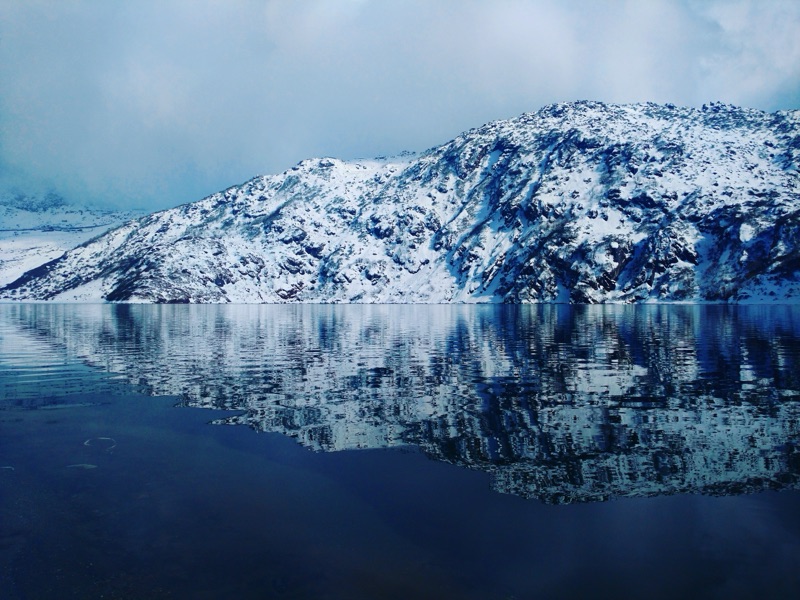
Cradled in a rocky bowl at 12,313 feet, Tsomgo (also spelled Changu) is a glacial lake that changes personality with the seasons. In winter, its surface freezes into a sheet of turquoise ice ringed by snow-covered peaks. Come spring, the ice melts to reveal water so intensely blue that the surrounding rhododendrons and primulas are reflected in mirror-perfect detail. Decorated yaks graze along the shore, and a small temple dedicated to Guru Padmasambhava sits at the water's edge. The lake is sacred to the people of Sikkim, and the atmosphere here is reverential, almost hushed, a world away from the bustling streets of Gangtok just 40 kilometres below.
State: Sikkim
Best Time to Visit: March to May (rhododendrons in bloom) and December to February (frozen lake)
How to Get There: 40 km from Gangtok, about 2 hours by road; often combined with a Nathula Pass trip.
Permit Required: Yes — restricted area permit arranged via Gangtok tour operators.
Pro Tip: Visit on a weekday to avoid the convoy traffic. Carry an ORS packet — altitude sickness can catch you off guard here.
9. Dzukou Valley, Nagaland
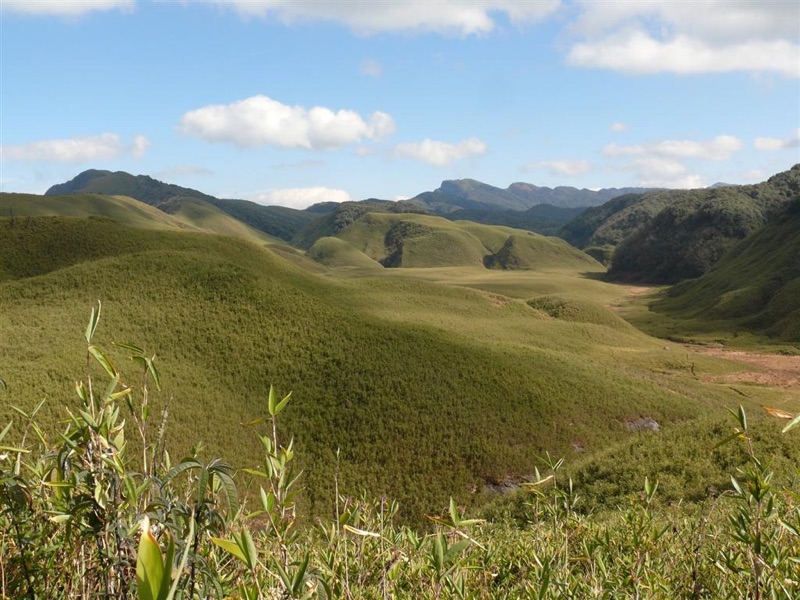
Nicknamed the "Valley of Flowers of the East," Dzukou Valley sits at the border of Nagaland and Manipur at an altitude of roughly 8,000 feet. The valley floor is a vast natural carpet that shifts colour with the seasons: emerald green bamboo groves in winter, riots of lilies and rhododendrons in summer, and a golden blaze of grass in autumn. The two-day trek from Viswema village (near Kohima) crosses dramatic ridgelines with panoramic views before dropping into the valley, where a basic government rest house provides overnight shelter. Dzukou remains relatively untouched by commercialisation, and the silence here — broken only by birdsong and wind — is almost spiritual in its intensity.
State: Nagaland (border with Manipur)
Best Time to Visit: June to September (flowers in full bloom) and November to March (golden grasses, clear skies)
How to Get There: Trek from Viswema village, 20 km south of Kohima (about 5-hour hike to the valley floor).
Permit Required: No (Nagaland dropped ILP requirements for Indian nationals in 2023)
Pro Tip: Carry all your food and warm layers — the rest house has shelter but nothing else. Start early to reach before afternoon mist rolls in.
10. Loktak Lake, Manipur
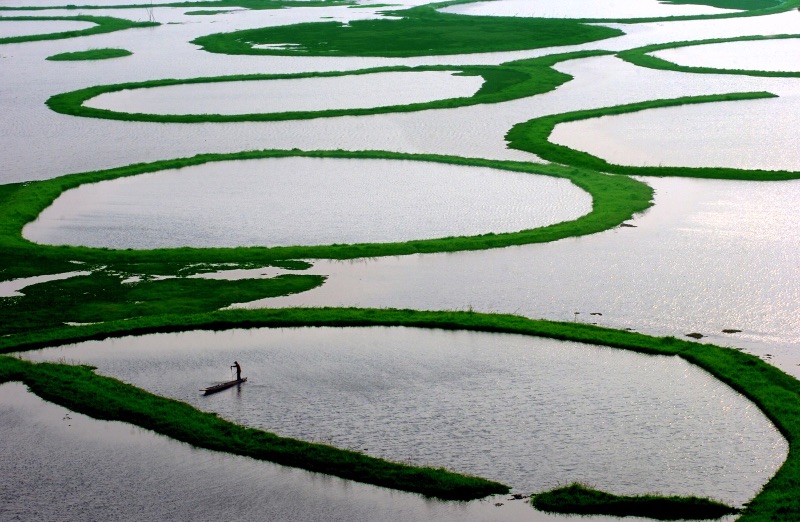
Loktak is not like any lake you have seen before. Across its 40-square-kilometre surface, circular floating islands called phumdis — thick mats of decomposed vegetation and organic soil — drift slowly with the current, creating an ever-shifting mosaic of green and blue. The Keibul Lamjao National Park, the world's only floating national park, occupies the southern rim of the lake and is the last natural habitat of the Sangai (Manipur brow-antlered deer), one of the rarest mammals on the planet. Local Meitei fishermen still use traditional athaphum huts built directly on the floating islands, and a boat ride through these floating homesteads feels like visiting a culture that exists on an entirely different plane.
State: Manipur
Best Time to Visit: October to February (Sangai Festival in November is a bonus)
How to Get There: 48 km from Imphal airport, about 1.5 hours by road to Moirang or Sendra Island.
Permit Required: No (Manipur no longer requires ILP for Indian tourists)
Pro Tip: Visit Sendra Island for the best panoramic views, then take a boat to the fishing phumdis for an unforgettable close-up experience.
Ready to Start Planning?
Compare tour packages covering these incredible destinations. Meghalaya, Arunachal Pradesh, Sikkim, Nagaland & more — all in one place.
Compare Tour Packages11. Majuli Island, Assam
Sitting in the middle of the mighty Brahmaputra River, Majuli is the world's largest river island and one of Assam's most culturally significant places. The island is the cradle of Assamese neo-Vaishnavite culture, home to nearly two dozen satras (monasteries) where monks preserve centuries-old traditions of dance, music, theatre, and manuscript painting. The annual Raas Festival in November, a dramatic three-day performance of the life of Lord Krishna, draws pilgrims and art lovers from across India. Despite ongoing erosion that shrinks its boundaries each monsoon, Majuli's charm endures — rice paddies stretching to the horizon, bamboo cottages on stilts, and some of the warmest hospitality you will find anywhere in India.
State: Assam
Best Time to Visit: October to March (dry season; November for Raas Festival)
How to Get There: Ferry from Jorhat's Nimati Ghat (1-hour crossing); ferries run multiple times daily.
Permit Required: No
Pro Tip: Rent a bicycle at the ferry landing — Majuli is flat and cycling is the best way to explore the satras and villages at your own pace.
12. Sela Pass, Arunachal Pradesh
At 13,700 feet, Sela Pass is the gateway to Tawang and one of the most dramatically beautiful mountain passes in the eastern Himalayas. The road climbs through dense forest before breaking above the treeline into a landscape of bare rock, snow, and the glittering Sela Lake, a sacred water body believed by locals to be the abode of a goddess. Thousands of Buddhist prayer flags stretch between the peaks in every direction, their colours vivid against the grey stone and white snow. On clear winter mornings, the frozen lake, the fluttering flags, and the surrounding snow-covered ridges combine to create a scene of such stark beauty that many travellers count it as the emotional highlight of their entire Northeast trip.
State: Arunachal Pradesh
Best Time to Visit: April to June and September to November (winter crossings possible but road closures are common)
How to Get There: On the Tezpur-Tawang highway, about 5 hours from Bomdila or 3 hours from Tawang.
Permit Required: Yes — ILP for Indian nationals, PAP for foreigners.
Pro Tip: The new Sela Tunnel (opened 2024) bypasses the pass in bad weather, but if roads are clear, drive over the top for the views.
13. Mawlynnong, Meghalaya
Crowned "Asia's Cleanest Village" in 2003 by a travel magazine, Mawlynnong has parlayed that title into a charming eco-tourism destination that genuinely lives up to the billing. Bamboo dustbins line every path, flowering hedges border every yard, and plastic is notably absent. The village also offers a natural living root bridge, a sky walk platform built atop a giant fig tree that offers bird's-eye views over the Bangladesh plains, and a boulder balanced improbably on another rock that the locals call the "balancing rock." It is a small village, easily explored in a few hours, but the combination of pristine tidiness, warm Khasi hospitality, and those unexpected natural wonders makes it well worth the detour from the Dawki road.
State: Meghalaya
Best Time to Visit: October to May
How to Get There: 90 km from Shillong (about 3 hours), often combined with a Dawki day trip.
Permit Required: No
Pro Tip: Combine Mawlynnong, Dawki, and the living root bridges into a 2-day Meghalaya circuit — check our Meghalaya 5-day itinerary for the full plan.
14. Kohima War Cemetery, Nagaland
On a terraced hillside in the heart of Nagaland's capital lies one of the most moving war memorials in all of Asia. The Kohima War Cemetery marks the site of the Battle of Kohima (April-June 1944), often called the "Stalingrad of the East," where British and Indian forces halted the Japanese advance into India in some of the fiercest hand-to-hand combat of the Second World War. The cemetery, maintained immaculately by the Commonwealth War Graves Commission, holds 1,420 graves arranged in neat rows on the terraced slope, and a simple stone inscription carries the famous epitaph: "When you go home, tell them of us and say, for your tomorrow, we gave our today." Standing here, reading the names and ages etched into stone, many of them barely 20 years old, is a profoundly humbling experience that brings a forgotten chapter of world history into sharp emotional focus.
State: Nagaland
Best Time to Visit: Year-round (October to May for best weather)
How to Get There: Located on Garrison Hill in Kohima town; fly to Dimapur (74 km), then drive 2 hours up to Kohima.
Permit Required: No
Pro Tip: Combine your Kohima visit with the Hornbill Festival in December for the complete Nagaland experience.
15. Gurudongmar Lake, Sikkim
At a lung-crushing 17,800 feet, Gurudongmar is one of the highest lakes in the world and undoubtedly one of the most beautiful. Sacred to both Buddhists and Sikhs (Guru Nanak Dev Ji is believed to have blessed the lake during his travels), a portion of Gurudongmar famously remains unfrozen even when the rest of the surface turns to solid ice in winter. The drive from Lachen to the lake, through a treeless high-altitude desert dotted with yak herds and military outposts, is an adventure in itself. When you finally reach the shore and see the vast expanse of crystalline blue water ringed by barren, snow-dusted mountains with absolutely nothing man-made in any direction, the sense of pristine isolation is overwhelming.
State: Sikkim
Best Time to Visit: March to June and October to December (roads may close in deep winter)
How to Get There: Drive from Lachen (67 km, about 3 hours on rough mountain roads); Lachen is a day's drive from Gangtok.
Permit Required: Yes — restricted area permit via Gangtok operators. Foreigners are not permitted beyond Thangu.
Pro Tip: Spend a night in Lachen to acclimatise and start the drive at 4 AM to reach the lake by sunrise before clouds roll in.
16. Phawngpui Peak (Blue Mountain), Mizoram
Mizoram's highest point at 7,100 feet is called the Blue Mountain because of the blue haze that perpetually drapes its summit, created by the volatile oils released by the dense subtropical forest that covers its flanks. Phawngpui sits within a national park that shelters some of the richest biodiversity in the Northeast, including rare orchids, rhododendrons, and elusive wildlife like the Hoolock gibbon and Mrs Hume's pheasant. The trek to the summit traverses thick bamboo jungle before opening up to panoramic views that, on a clear day, extend across the Myanmar border and into the blue-green infinity of the Chin Hills. Mizoram sees very few tourists compared to Meghalaya or Sikkim, so a visit here carries the genuine thrill of exploration.
State: Mizoram
Best Time to Visit: October to March (clear skies, comfortable temperatures)
How to Get There: Drive from Aizawl to Chhimtuipui district (about 10 hours), then a guided trek to the peak.
Permit Required: No (Mizoram dropped ILP for Indian nationals)
Pro Tip: Arrange a trek through the Mizoram Tourism office in Aizawl — local Mizo guides know the trails and make the trip significantly safer and more rewarding.
17. Unakoti, Tripura
Hidden in the forested hills of Tripura, Unakoti is an archaeological wonder that remains astonishingly unknown to most Indian travellers. Carved into and around a hillside are enormous bas-relief rock carvings and stone images dating back to the 7th-9th century, depicting Shiva, Ganesha, Nandi, and other Hindu deities in an art style that blends Shaivite iconography with local tribal aesthetics. According to legend, there are "one less than a crore" (9,999,999) images here, which is what "Unakoti" literally means. The centrepiece is a colossal 30-foot-tall carving of Shiva's face, crowned with an elaborate headdress and flanked by two female figures. The combination of ancient mystery, overgrown jungle, and the sheer scale of the carvings gives Unakoti an atmosphere not unlike Cambodia's temple ruins, yet you will likely have the site almost entirely to yourself.
State: Tripura
Best Time to Visit: October to March (pleasant weather, minimal rain)
How to Get There: 178 km from Agartala (about 5 hours by road), near the town of Kailashahar.
Permit Required: No
Pro Tip: Go early in the morning when the light filters through the trees onto the carvings — it is one of the most atmospheric heritage sites in all of India.
18. Nohkalikai Falls, Meghalaya
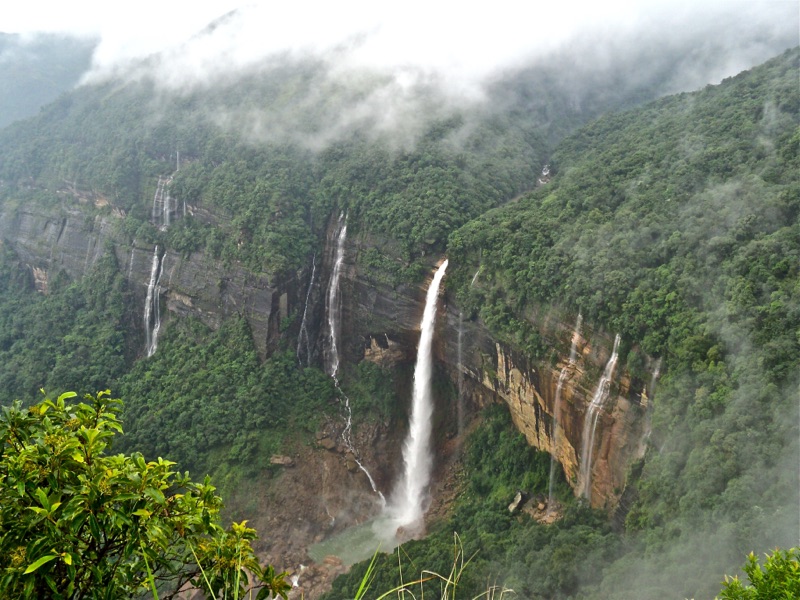
Plunging 1,115 feet from the edge of the Cherrapunji plateau into a misty gorge, Nohkalikai is the tallest plunge waterfall in India and arguably the most visually stunning. The water free-falls from the cliff's lip into a vibrant turquoise pool far below, and the force of the drop sends a permanent cloud of mist swirling up the rock face. The viewing platform sits right at the edge of the precipice, giving you a dizzying perspective straight down the rock wall to the pool. During the monsoon months, the falls swell into a roaring curtain of white water; in winter, the reduced flow reveals the vivid blue-green colour of the plunge pool in breathtaking detail. The name "Nohkalikai" carries a dark Khasi legend about a mother's grief, lending the site an emotional weight that matches its physical grandeur.
State: Meghalaya
Best Time to Visit: September to December (full flow, clearing skies); avoid peak monsoon when mist can obscure views
How to Get There: 7 km from Cherrapunji town, easily reachable by taxi or auto-rickshaw.
Permit Required: No
Pro Tip: Arrive by 7 AM for the clearest views — clouds often close in by mid-morning during the wetter months.
19. Hornbill Festival, Nagaland
Every December, the 16 major tribes of Nagaland converge at the Naga Heritage Village in Kisama, just outside Kohima, for a 10-day celebration of their warrior heritage, artistic traditions, and culinary culture. Dubbed the "Festival of Festivals," the Hornbill Festival is a kaleidoscope of traditional war dances, indigenous games, tribal music competitions, and handicraft stalls — all set against the backdrop of bamboo morungs (tribal houses) and the green hills of Nagaland. Each tribe performs in its own distinctive attire, featuring elaborate hornbill-feather headdresses, boar-tusk necklaces, and woven shawls that represent specific clan identities. The festival is also the best place to sample Naga cuisine, from fiery pork with raja mircha (one of the world's hottest chillies) to smoked meats and bamboo-shoot delicacies.
State: Nagaland
Best Time to Visit: December 1-10 every year (fixed dates)
How to Get There: Fly to Dimapur, then drive 2 hours to Kohima; Kisama village is 12 km south of Kohima.
Permit Required: No (but book accommodation well in advance — Kohima fills up fast during the festival)
Pro Tip: Combine the Hornbill Festival with a visit to Kohima War Cemetery and a Dzukou Valley trek for the ultimate Nagaland week.
20. Double Decker Root Bridge, Meghalaya
The crown jewel of Meghalaya's living root bridges, the Double Decker at Nongriat is a two-tiered marvel of bio-engineering where the Khasi people have trained two layers of Ficus elastica roots to span a river, one above the other, creating a natural double-storey bridge estimated to be over 200 years old. Reaching it requires a hike of roughly 3,500 stone steps down from Cherrapunji to the village of Nongriat, through dense subtropical forest, past smaller single-decker root bridges and natural swimming pools fed by crystal-clear streams. The bridge itself is wider and sturdier than you expect, easily accommodating foot traffic on both levels, and the entire setting — tangled roots, dappled sunlight, the sound of rushing water below — feels like a scene lifted from a fantasy novel. This is the single image that defines Northeast India on the global travel stage, and experiencing it in person is even more extraordinary than the photographs suggest.
State: Meghalaya
Best Time to Visit: October to March (dry, cooler weather makes the steep hike manageable)
How to Get There: Trek from Tyrna village near Cherrapunji (3,500 steps down, same back up — allow 4-5 hours round trip).
Permit Required: No
Pro Tip: Spend a night at a Nongriat homestay. The bridge at dawn, before any other visitors arrive, with mist rising off the river, is an image you will carry forever. See our Meghalaya itinerary for the full plan.
Planning Your Northeast India Visit
With 20 incredible destinations spread across 8 states, planning a Northeast India trip requires a bit more thought than your typical Indian holiday. Here are the key resources to help you build the perfect itinerary:
- When to go: Weather varies dramatically between states and altitudes. Read our Best Time to Visit Northeast India guide for a month-by-month breakdown covering all 8 states.
- Budget: Northeast India can be surprisingly affordable or wildly expensive depending on your choices. Our complete budget guide breaks down costs for flights, hotels, food, permits, and activities.
- Permits: Arunachal Pradesh and parts of Sikkim require advance permits. Some areas have been relaxed recently. Get the latest rules in our ILP and PAP permits guide.
- Tour packages: If you prefer a guided trip, compare tour packages from top operators covering Meghalaya, Arunachal, Sikkim, and multi-state circuits.
- Destinations overview: For a state-by-state deep dive, visit our destinations guide with details on all 8 states.
Most travellers find that 10-14 days is the sweet spot for covering 2-3 states comfortably. If you only have a week, focus on Meghalaya (places 1, 2, 7, 13, 18, 20 from this list) or a Sikkim-only circuit (places 5, 8, 15). For the full Northeast experience spanning all 8 states, plan for at least 3-4 weeks.
Your Northeast Adventure Starts Here
Northeast India is not a place you simply "visit." It is a place that recalibrates your sense of what India can be. Every state has something that will stop you mid-step and make you reach for your camera, your journal, or just stand there in silence taking it all in. The crystal waters of Dawki. The living architecture of the root bridges. The sacred silence of Gurudongmar at dawn. The thundering power of Nohkalikai in the monsoon. These are not just sights — they are experiences that change the way you see travel.
The best part? This region is still in the early chapters of its tourism story. The trails are not yet crowded, the prices are still reasonable, the people are still genuinely delighted to welcome visitors, and the landscapes remain as pristine as they have been for centuries. But that window will not stay open forever. As infrastructure improves and word spreads, the Northeast of 2030 will look very different from the Northeast of 2026.
So start planning now. Pick your top 5 from this list, check the best time to visit, sort out your permits, compare packages, and go. Northeast India is waiting — and it will not disappoint.
Never Miss a Travel Guide
Subscribe to get new articles, exclusive travel deals, and our free 2026 Northeast India Travel Guide PDF delivered straight to your inbox.
Subscribe Free