- Why Visit Nagaland?
- Best Time to Visit Nagaland
- Inner Line Permit for Nagaland
- Kohima — War Cemetery & Capital City
- Hornbill Festival & Kisama Heritage Village
- Dzukou Valley Trek
- Mon — Land of the Konyak Headhunters
- Mokokchung & Other Places
- Suggested 5-Day Nagaland Itinerary
- Budget & Practical Tips
Why Visit Nagaland?
Nagaland is unlike any other state in India. Perched on the mountainous ridges of the eastern Himalayas, this landlocked state bordering Myanmar is home to 16 major Naga tribes, each with its own language, customs, and warrior traditions. A Nagaland tour takes you into a world of ancient headhunting villages, vibrant tribal festivals, misty mountain treks, and some of the warmest hospitality you will find anywhere in the Northeast.
Despite being one of the least-visited states in India, Nagaland offers experiences that are genuinely one-of-a-kind. Where else can you sit beside a former headhunter in a remote mountain village, trek through valleys blanketed in wild lilies, or watch thousands of tribal warriors perform ancient dances at the Hornbill Festival? If you are looking for offbeat travel that challenges your assumptions about India, Nagaland delivers.
Best Time to Visit Nagaland
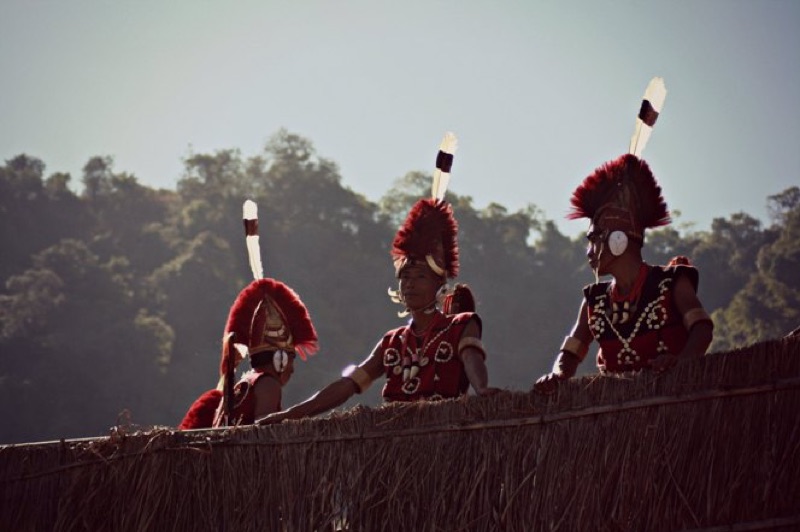
The best months to visit Nagaland are October to December. The monsoon retreats by late September, and the weather turns crisp and clear with daytime temperatures between 15 and 25 degrees Celsius. This window also coincides with the Hornbill Festival in the first week of December, which is the single biggest reason most travellers visit the state.
If you prefer trekking and want fewer crowds, March to May is a solid alternative. The Dzukou Valley blooms with wild lilies in June and July, but heavy monsoon rains make trails slippery and unpredictable. Winters (January to February) are cold in the hills, with temperatures dipping to 4 degrees Celsius at night in Kohima, but clear skies make for excellent photography.
For a detailed month-by-month breakdown, read our best time to visit Northeast India guide.
Inner Line Permit (ILP) for Nagaland
All Indian nationals from outside Nagaland need an Inner Line Permit to enter the state. Foreign nationals need a Protected Area Permit (PAP) or Restricted Area Permit (RAP) from the Ministry of Home Affairs.
The ILP application process for Nagaland is straightforward. You can apply online through the Nagaland government portal. You will need a passport-size photo, a government ID proof (Aadhaar or voter ID), and details of your travel dates and places you plan to visit. The permit is typically issued within 24 to 48 hours and is valid for up to 10 days.
You can also get your ILP on arrival at the Dimapur Railway Station counter or the Nagaland House offices in Delhi, Kolkata, and Guwahati. However, we strongly recommend applying online in advance to avoid delays. For the full step-by-step process, fees, and common mistakes, see our complete ILP and permit guide.
Kohima — War Cemetery & Capital City
Kohima, the capital of Nagaland at 1,444 metres above sea level, is where most visitors begin their Nagaland tour. The city is built across a series of ridges and valleys, and while the town centre can feel congested, the surrounding hills are stunningly beautiful.
The Kohima War Cemetery is the most visited site in the city. Maintained by the Commonwealth War Graves Commission, it honours the soldiers who fell during the Battle of Kohima in 1944 — widely regarded as the turning point of the Second World War in Southeast Asia. The cemetery is impeccably maintained with terraced lawns, and the inscription on the memorial stone is one of the most moving epitaphs from the war.
Other notable places in Kohima include the Nagaland State Museum, which has an excellent collection of tribal artefacts, weapons, and traditional Naga clothing, and Kohima Cathedral, one of the largest churches in Asia. The local market near the Main Town area sells Naga shawls, bamboo crafts, and fermented foods that are central to the local diet.
Hornbill Festival & Kisama Heritage Village
The Hornbill Festival is Nagaland's flagship cultural event and the single biggest tourist draw in the state. Held every year from 1 to 10 December at Kisama Heritage Village, about 12 kilometres from Kohima, the festival showcases the traditions, music, dance, food, and craftsmanship of all 16 Naga tribes under one roof.
Think of it as a living museum. Each tribe sets up a traditional hut (morung) with authentic architecture, artifacts, and demonstrations. You will see Naga warriors in full ceremonial dress performing war dances, tribal elders singing folk songs, and artisans weaving intricate shawls and carving wood. There are also archery competitions, Naga chilli-eating contests, pork cooking competitions, and a vibrant night bazaar with local food stalls.
If you are planning a Nagaland tour, timing your visit to coincide with the Hornbill Festival is the single best decision you can make. Book accommodation in Kohima at least two to three months in advance, as hotels fill up fast. Budget guesthouses start around INR 1,500 per night, while mid-range hotels charge INR 3,000 to 5,000 during the festival.
Dzukou Valley Trek
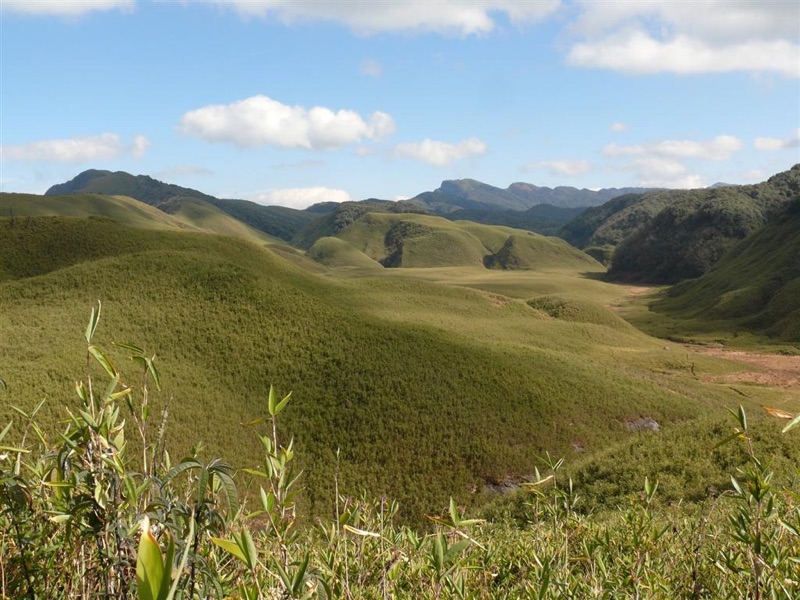
The Dzukou Valley, at roughly 2,452 metres on the border of Nagaland and Manipur, is one of the most beautiful treks in all of Northeast India. Often called the "Valley of Flowers of the Northeast," it is a vast natural amphitheatre of rolling green hills, seasonal streams, and wildflowers including the rare Dzukou Lily that blooms from June to September.
The most common route starts from Viswema village (about 20 kilometres south of Kohima) and takes roughly 5 to 6 hours of moderate trekking to reach the valley floor. The trail begins with a steep ascent through dense forest, then levels out along a beautiful ridge with panoramic views. There is a basic government rest house inside the valley where you can spend the night — bring your own sleeping bag and food as there are no shops.
The best months for the Dzukou Valley trek are June to September for flowers and October to November for clear weather and post-monsoon greenery. Avoid December to February as the valley gets extremely cold with occasional snowfall, and trails can be dangerously slippery.
Mon — Land of the Konyak Headhunters
The remote Mon district in the far northeast of Nagaland is home to the Konyak Naga tribe, the last headhunters of India. Until the 1960s, headhunting was an integral part of Konyak culture, and you can still meet tattooed elders who carry the marks of their warrior past — facial tattoos earned for each head they took in battle.
Visiting Mon requires extra effort (it is roughly 6 to 7 hours by road from Kohima via Mokokchung), but the experience is genuinely unlike anything else in India. The Shangnyu and Longwa villages are the most visited, where you can meet Konyak elders, see human skulls displayed outside the chief's morung (communal men's house), and learn about a warrior tradition that has almost entirely disappeared.
The Aoling Festival in the first week of April is the Konyak equivalent of a harvest festival, with traditional dancing, feasting, and rituals. If your dates allow, try to combine Mon with the Aoling Festival for a truly immersive tribal experience. Accommodation in Mon is basic — expect government rest houses and simple homestays at INR 800 to 1,500 per night.
Mokokchung & Other Places Worth Visiting
Mokokchung is the cultural heart of the Ao Naga tribe and one of the most pleasant towns in Nagaland. It sits at around 1,325 metres and has a laid-back charm with clean streets, friendly locals, and good food. The Ungma village, just outside town, is the oldest and largest Ao village and offers a glimpse into traditional community life. The Moatsu Festival in May is the Ao harvest celebration and features singing, dancing, and communal feasts.
Other destinations worth considering for a longer Nagaland tour include Dimapur (the main gateway town with the Kachari Ruins, a collection of mysterious mushroom-shaped stone pillars), Pfutsero (the coldest town in Nagaland, with a spectacular sunrise viewpoint), and Tuophema (a model tourist village offering a curated homestay experience with traditional Naga architecture, food, and cultural performances).
Suggested 5-Day Nagaland Itinerary
| Day | Destination | Highlights |
|---|---|---|
| Day 1 | Arrive Dimapur, drive to Kohima | Kachari Ruins (optional), evening walk around Kohima town |
| Day 2 | Kohima sightseeing | War Cemetery, State Museum, Cathedral, local market |
| Day 3 | Dzukou Valley trek | Trek from Viswema, camp overnight in the valley |
| Day 4 | Return from Dzukou, Kisama Heritage Village | Morning trek back, afternoon at Kisama (or Hornbill Festival if December) |
| Day 5 | Tuophema or Khonoma village | Traditional Naga village experience, depart to Dimapur |
If you have 7 to 8 days, add Mon district (2 extra days for the drive and village visits) or extend to Mokokchung for the Ao cultural experience.
Budget & Practical Tips
Getting there: The nearest airport is Dimapur Airport (DMU) with direct flights from Kolkata and Guwahati. Dimapur is also connected by rail to Guwahati (about 5 hours by train). From Dimapur, it is a 3-hour drive to Kohima.
Budget breakdown for a 5-day Nagaland tour (per person, budget traveller):
| Expense | Estimated Cost (INR) |
|---|---|
| Flights (return from Guwahati) | 5,000 - 8,000 |
| Accommodation (5 nights) | 6,000 - 12,000 |
| Local transport (shared cabs/buses) | 3,000 - 5,000 |
| Food (5 days) | 3,000 - 5,000 |
| ILP + Misc | 500 - 1,000 |
| Total | 17,500 - 31,000 |
Food tip: Naga cuisine is meat-heavy and relies on smoked meats, fermented bamboo shoot, and the legendary Naga King Chilli (Bhut Jolokia). If you enjoy spicy food, you will love it. Pork with bamboo shoot, smoked chicken, and axone (fermented soybean) are must-try dishes. Vegetarian options are limited in rural areas, so carry snacks if needed.
Safety: Nagaland is generally safe for tourists. People are welcoming and curious about visitors. However, some remote districts near the Myanmar border may have occasional security advisories — check local news before heading to Mon or Tuensang districts. Mobile connectivity is patchy outside Kohima and Dimapur, so download offline maps.
For a detailed cost breakdown across all Northeast states, read our Northeast India budget guide.