Why Visit Manipur?
Manipur, which translates to "Jewelled Land," is a state that more than lives up to its name. Encircled by nine hill ranges and centred around the vast Imphal Valley, Manipur offers a combination of natural beauty, rich tribal heritage, and historical significance that few states in India can match. A Manipur tour introduces you to floating islands on Loktak Lake, the world's only floating national park, the birthplace of modern polo, and battlefields that shaped the outcome of the Second World War in Asia.
Despite being one of the smaller states in Northeast India, Manipur packs an extraordinary density of experiences. The endangered Sangai deer (the dancing deer of Manipur) survives nowhere else on Earth. The Ima Keithel market in Imphal is Asia's largest all-women market, run entirely by Meitei women for over 500 years. And the hill districts are home to Kuki, Naga, and Zomi tribes with their own distinct traditions, festivals, and cuisine.
Best Time to Visit Manipur
The ideal months for a Manipur tour are October to March. Post-monsoon weather brings clear skies, pleasant temperatures between 10 and 25 degrees Celsius, and the best conditions for sightseeing around Loktak Lake and the Imphal Valley.
November to December is particularly good because the Sangai Festival is held in late November, showcasing Manipuri dance, handicrafts, indigenous sports, and the state's diverse cuisine. If you are interested in the Shirui Lily (the state flower, which grows only on the Siroi Hills), plan for late May to early June when the flowers bloom, though be prepared for early monsoon showers.
Avoid June to September if possible. Heavy monsoon rains can cause landslides on the hill roads, and the Imphal-Jiribam and Imphal-Silchar highways are prone to closures during this period.
For a complete monthly breakdown, see our best time to visit Northeast India guide.
Inner Line Permit (ILP) for Manipur
All Indian nationals from outside Manipur need an Inner Line Permit to enter the state. This rule was re-introduced in 2019 and is strictly enforced. Foreign nationals require a Protected Area Permit (PAP).
You can apply for the Manipur ILP online through the state government's e-service portal. The requirements are simple: a passport-size photograph, a government-issued ID (Aadhaar card or voter ID), and your travel dates. The ILP is typically processed within 24 to 72 hours and is valid for up to 15 days. There is a nominal processing fee of INR 50 to 100.
ILP counters are also available at the Imphal Airport and at Manipur House offices in Delhi and Guwahati. However, we recommend applying online at least one week before travel to avoid last-minute complications. Read our complete ILP guide for the step-by-step process.
Loktak Lake & Keibul Lamjao National Park
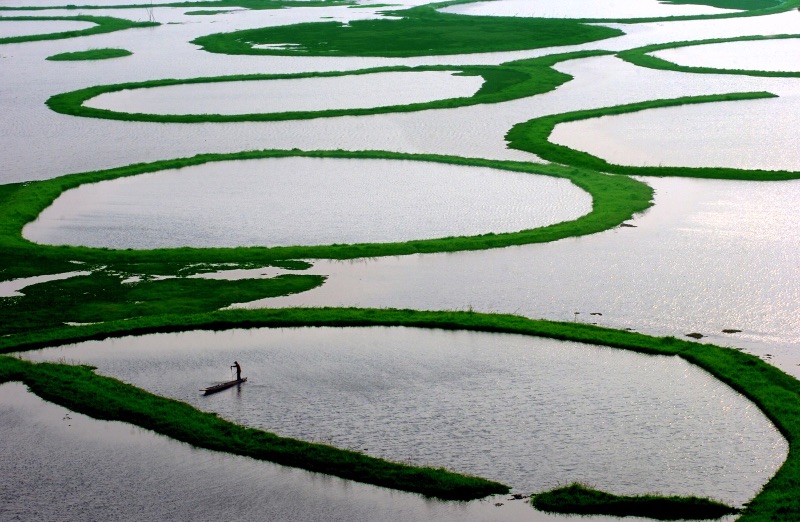
Loktak Lake is the largest freshwater lake in Northeast India and the undisputed highlight of any Manipur tour. Located about 48 kilometres south of Imphal, the lake covers roughly 287 square kilometres and is famous for its phumdis — floating masses of vegetation, soil, and organic matter that drift across the lake surface like giant green rafts.
Some of these phumdis are thick enough for people to build huts on. The fishing communities of Loktak have lived on these floating islands for generations, and seeing their way of life from a boat is one of the most memorable experiences in all of Northeast India. The Sendra Island on the lake offers a viewpoint with panoramic views of the entire lake and its floating islands.
Within Loktak Lake lies Keibul Lamjao National Park, the world's only floating national park. This 40-square-kilometre patch of thick, intertwined phumdis is the last natural habitat of the Sangai deer (Rucervus eldii eldii), also known as the "dancing deer" because of its graceful gait on the spongy floating vegetation. The Sangai was declared extinct in the 1950s before being rediscovered in the 1970s. Today, the population is estimated at around 260 animals. Early morning boat rides into the park offer the best chance of spotting them.
Tip: Hire a local boatman from Keibul village for a 2 to 3 hour ride through the phumdis. Rates are approximately INR 500 to 800 per boat. Carry binoculars for wildlife spotting.
Imphal — Kangla Fort, INA Museum & Markets
Imphal, the capital city, sits at 786 metres in the centre of the Imphal Valley and serves as your base for exploring Manipur. While the city itself is not conventionally beautiful, it has several significant historical and cultural sites that deserve a full day of exploration.
The Kangla Fort is the most important historical site in Manipur. This ancient fortification on the banks of the Imphal River was the seat of Manipuri kings for nearly 2,000 years before the British took control in 1891. The fort complex includes the sacred Kangla Sha (twin dragon statues), old palace ruins, temples, and a small museum. Entry is free and the grounds are well-maintained for a peaceful walk.
The INA Museum (Indian National Army Museum) tells the story of Subhas Chandra Bose and the INA's march toward Delhi during the Second World War. Manipur was the site of the Battles of Imphal and Kohima in 1944, which turned the tide of the Japanese advance into India. The museum contains photographs, uniforms, weapons, and letters from the era.
No visit to Imphal is complete without a walk through Ima Keithel (Mothers' Market), run entirely by more than 5,000 Meitei women. Spread across three buildings near the city centre, it sells everything from fresh vegetables and fish to handloom textiles and traditional Manipuri jewellery. It is one of the most vibrant and unique markets in Asia.
Other Imphal attractions include the Manipur State Museum, the Shree Govindajee Temple (the most important Vaishnavite temple in the state with daily Ras Lila dance performances), and the Manipur Polo Ground, where the modern game of polo is believed to have originated.
Siroi Hills & Beyond
The Siroi Hills in Ukhrul district, about 83 kilometres northeast of Imphal, are home to the Shirui Lily (Lilium mackliniae), a rare terrestrial lily found nowhere else on Earth. The flower blooms in late May and early June on the hilltops at around 2,590 metres. The trek to the summit takes about 3 to 4 hours and passes through oak and rhododendron forests with beautiful views of the surrounding hill ranges.
Ukhrul town itself is a pleasant hill station and the heartland of the Tangkhul Naga tribe. The Kachou Phung festival in December brings together Tangkhul communities for traditional games, feasting, and cultural performances. If you visit during this time, you can experience a side of Manipur that most tourists never see.
Other places worth visiting on a longer Manipur tour include Moreh (the Indo-Myanmar border town with a bustling cross-border market), Tamenglong (home to the stunning Zeilad Lake and Barak waterfall), and Churachandpur (the gateway to the Kuki and Zomi hill areas with rolling green landscapes).
Suggested 4-Day Manipur Itinerary
| Day | Destination | Highlights |
|---|---|---|
| Day 1 | Arrive Imphal | Kangla Fort, Ima Keithel market, Shree Govindajee Temple |
| Day 2 | Imphal sightseeing | INA Museum, War Cemetery, State Museum, Polo Ground |
| Day 3 | Loktak Lake & Keibul Lamjao | Boat ride, Sendra viewpoint, Sangai deer spotting |
| Day 4 | Siroi Hills or departure | Day trip to Ukhrul or explore Imphal markets before flight |
For a 6-day trip, add Ukhrul and Siroi Hills (1 extra night) and Moreh border town (1 day trip from Imphal).
Budget & Practical Tips
Getting there: Imphal Airport (IMF), officially Bir Tikendrajit International Airport, has direct flights from Delhi, Kolkata, Guwahati, and Bangalore. It is well connected and is the easiest way to reach Manipur. The alternative road route from Guwahati via the Imphal-Silchar highway takes roughly 12 to 14 hours and can be disrupted during monsoons.
Budget breakdown for a 4-day Manipur tour (per person, budget traveller):
| Expense | Estimated Cost (INR) |
|---|---|
| Flights (return from Guwahati or Delhi) | 5,000 - 10,000 |
| Accommodation (4 nights) | 4,000 - 8,000 |
| Local transport (shared cabs/autos) | 2,000 - 4,000 |
| Food (4 days) | 2,000 - 3,500 |
| Boat ride & entry fees | 800 - 1,500 |
| ILP + Misc | 500 - 1,000 |
| Total | 14,300 - 28,000 |
Food tip: Manipuri cuisine is distinct from the rest of Northeast India. It relies heavily on fermented fish (ngari), bamboo shoot, and a unique herb called maroi. The Eromba (boiled vegetables mashed with chilli and fermented fish) and Singju (a spicy salad) are must-try dishes. The Chamthong (vegetable stew) is an excellent vegetarian option. Street food stalls near Ima Keithel serve affordable and authentic Manipuri meals.
Safety: Imphal city and the tourist areas around Loktak Lake are generally safe. However, check current travel advisories before visiting hill districts, particularly areas near the Myanmar border. Mobile connectivity works well in Imphal but can be unreliable in Ukhrul and Tamenglong districts.
For more Northeast India budgeting tips, read our complete budget guide.