- Why Kaziranga Should Be on Your List
- The 4 Safari Zones — Which One to Pick
- Jeep Safari vs Elephant Safari — Honest Comparison
- How to Book Your Kaziranga Safari
- Best Time to Visit Kaziranga
- What You'll Actually See (Realistic Expectations)
- Getting to Kaziranga
- Where to Stay
- Budget Breakdown (Per Person, 2 Days)
- 12 Things Most Tourists Get Wrong
- Frequently Asked Questions
Why Kaziranga Should Be on Your List
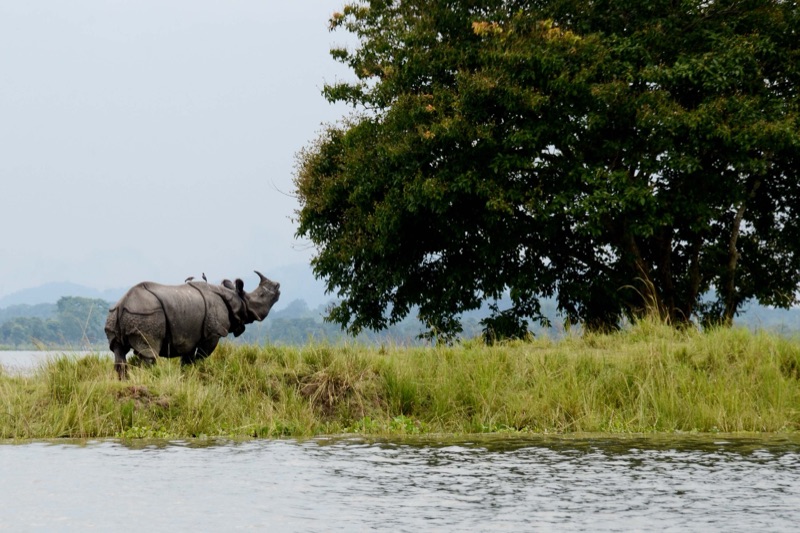
Two out of every three one-horned rhinoceroses alive today live in Kaziranga. Let that sink in. This 430 sq km patch of tall elephant grass and marshland along the Brahmaputra in Assam holds the fate of an entire species.
But Kaziranga isn't just about rhinos. On a single morning jeep safari, you might spot wild elephants crossing the road 30 metres ahead, a Bengal tiger's pug marks in the mud, and hundreds of migratory birds wheeling over the wetlands. It's one of the densest concentrations of wildlife anywhere in Asia.
The catch? Most visitors mess up the booking, pick the wrong zone, or show up in the wrong month. This guide fixes all of that.
| Detail | Info |
|---|---|
| Location | Golaghat & Nagaon districts, Assam |
| Area | 430 sq km (UNESCO World Heritage Site) |
| Open | 1 November to 30 April |
| Closed | May to October (monsoon flooding) |
| Nearest Airport | Jorhat (97 km, 2 hrs) or Guwahati (217 km, 4.5 hrs) |
| Entry Fee | 100 INR (Indian) / 650 INR (Foreign) |
| Camera Fee | 100 INR (still) / 500 INR (video) |
| Best For | Rhinos, wild elephants, Bengal tigers, birdwatching |
The 4 Safari Zones — Which One to Pick
This is where most people go wrong. Kaziranga has four safari zones, and each one gives you a completely different experience. You can't switch zones mid-safari, so choose wisely.
Central Range (Kohora) — Best for First-Timers
This is the most popular zone, and for good reason. The grasslands here are home to the highest density of rhinos in the park. On a good morning, you'll spot 8-12 rhinos without trying hard.
The downside? Everyone knows this. Central range sells out first, sometimes 3-4 days in advance during December-February peak season. Book the moment slots open.
Best for: Rhino sightings, first-time visitors, photography
Western Range (Bagori) — The Underrated Pick
If Central is sold out, Bagori is your best alternative. Rhino density is nearly as high, but tourist density is noticeably lower. You'll also see more wild buffalo herds here than in any other zone.
The terrain is a mix of grasslands and light woodland, which means more shade and slightly better conditions for spotting elephants in the treeline.
Best for: Rhinos without crowds, wild buffalo, elephants
Eastern Range (Agoratoli) — Birdwatcher's Paradise
The wetlands in Eastern range attract thousands of migratory birds between November and February. If you're carrying a telephoto lens and care about bird species counts, this is your zone.
Rhino sightings are possible but less frequent than Central or Western. You'll see more water birds, pelicans, and adjutant storks than mammals.
Best for: Birdwatching, wetland photography, quieter safaris
Burapahar Range — Off the Beaten Path
The least-visited zone. Hilly terrain, semi-evergreen forests, and a completely different feel from the grasslands. This is where you look for hoolock gibbons (India's only ape species), wild boar, and occasionally leopards.
Don't come here expecting rhinos. Come here expecting solitude and forest trails.
Best for: Hoolock gibbons, forest wildlife, avoiding crowds entirely
If you have two days, do Central range on morning 1 and Eastern range on morning 2. You get the rhino experience plus the birdwatching, and both mornings feel completely different.
Jeep Safari vs Elephant Safari — Honest Comparison
Everyone asks this question. Here's the straightforward answer.
| Jeep Safari | Elephant Safari | |
|---|---|---|
| Cost | 3,500-5,500 INR (full jeep, 6 seats) | 1,200 INR per person |
| Duration | 2-3 hours | 45 min to 1 hour |
| Timing | Morning (7:30 AM) + Afternoon (1:30 PM) | Morning only (5:30-6:30 AM) |
| Range covered | 20-25 km through the zone | Small area, walking pace |
| Rhino proximity | 15-30 metres (depends on luck) | 5-10 metres (almost guaranteed) |
| Availability | All 4 zones | Central and Western only |
| Booking | Online, 2-3 days ahead | On-site, very limited slots |
The verdict: Do the jeep safari for coverage and variety. Do the elephant safari if you want that once-in-a-lifetime moment of being 5 metres from a wild rhino with nothing between you except the elephant you're sitting on.
If you can only pick one, pick the jeep safari. If you have two days, do both.
Elephant safari slots are extremely limited (around 20-30 per morning) and cannot be pre-booked online in most cases. You need to be at the booking counter by 4:30-5:00 AM. During peak season, some people queue from 3:30 AM. This is not an exaggeration.
How to Book Your Kaziranga Safari
Online Booking (Jeep Safari)
- Go to the official Assam Tourism portal or the Kaziranga booking website
- Select your preferred date, zone, and time slot (morning or afternoon)
- Pay online — a full jeep costs 3,500-5,500 INR depending on zone and season
- Download and print the confirmation — they check it at the gate
- Reach the range entry point 15-20 minutes before your slot
Important: The booking window opens about a week in advance. Set a reminder. Central range for a Saturday morning in January will sell out within hours of opening.
Elephant Safari Booking
Elephant safaris are booked on-site at the respective range office (Kohora for Central, Bagori for Western). There's no reliable online booking for elephant safaris — ignore any third-party site claiming otherwise.
How to get a slot:
- Arrive at the range office by 4:30 AM
- Pay at the counter (1,200 INR per person)
- Slots are first-come, first-served
- Groups of 4 per elephant
Should You Book Through a Tour Operator?
If you're staying at a resort near Kaziranga, they'll usually arrange the jeep safari for you — but at a markup of 500-1,500 INR. The convenience is worth it if you don't want to deal with the booking portal yourself.
For the elephant safari, no operator can guarantee a slot. You still have to queue.
If you're planning a longer Assam trip, check our Assam 4-day itinerary which includes Kaziranga with all logistics sorted.
Best Time to Visit Kaziranga
The park is only open from November 1 to April 30. Within that window, your experience varies dramatically.
| Month | Weather | Rhino Sightings | Crowds | Verdict |
|---|---|---|---|---|
| November | Cool, clear, 15-25°C | Excellent — grass recently cut | Low | Best overall month |
| December | Cold mornings (5-10°C), foggy | Excellent | Moderate | Great, but carry warm layers |
| January | Coldest month, dense fog before 8 AM | Very good | Peak | Book 5+ days ahead |
| February | Warming up, fog clearing | Very good | Peak | Popular with photographers |
| March | Warm, 20-30°C, dry | Good — grass growing taller | Moderate | Comfortable weather |
| April | Hot, 25-35°C | Harder — tall grass hides animals | Low | Last chance before closure |
November is the sweet spot. The park opens, the grass has been burnt and cut during monsoon closure, so visibility is at its best. Rhinos are easy to spot across the open fields. Crowds haven't arrived yet. Afternoons are warm enough to skip the jacket.
For a complete state-by-state breakdown, read our best time to visit Northeast India guide.
What You'll Actually See (Realistic Expectations)
Travel blogs love to promise "spot the Big 5 of Kaziranga!" — rhino, tiger, elephant, wild buffalo, swamp deer. Here's what that actually looks like on the ground.
Almost guaranteed (95%+):
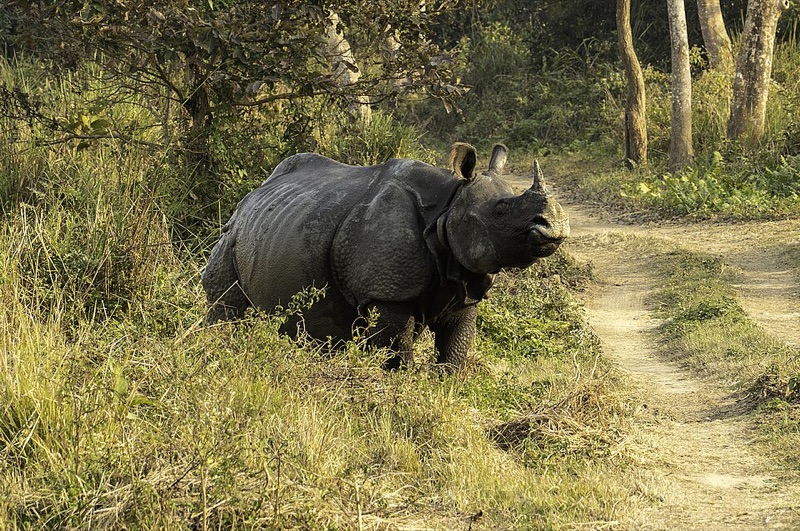
- One-horned rhinoceros — you'll see multiple, sometimes a mother with calf
- Wild elephants — usually spotted in herds of 8-15 near the treeline
- Wild buffalo — large herds, especially in Western range
- Swamp deer — common in grasslands, often in groups
Likely (50-70%):
- Hoolock gibbons (Burapahar range)
- Otters in the wetland channels
- Monitor lizards basking in afternoon sun
- Pelicans and adjutant storks (Eastern range)
Rare but possible (5-15%):
- Bengal tiger — Kaziranga has one of the highest tiger densities in India, but the tall grass makes sightings uncommon. Your guide might spot pug marks.
- Leopard — mainly in Burapahar's forest areas
- Gangetic dolphin — occasionally in river channels
Don't set your heart on a tiger sighting. If it happens, it's a bonus. Come for the rhinos — that experience alone is worth the trip.
Getting to Kaziranga
From Guwahati (217 km, 4-5 hours)
Most travelers arrive through Guwahati. The road is NH-37, mostly in decent condition. Options:
- Self-drive or private taxi: 3,500-4,500 INR one way. Most flexible option. The driver can drop you at your resort gate.
- Shared Sumo/Tata Magic: From Guwahati's Paltan Bazaar, shared vehicles to Kohora (Kaziranga's main village) cost 400-600 INR. Cramped but cheap.
- ASTC bus: Government bus from Guwahati ISBT. 300-400 INR, takes 5-6 hours with stops.
From Jorhat (97 km, 2 hours)
Closer option if you're coming from upper Assam or Majuli Island. Regular shared vehicles from Jorhat to Kohora for 200-300 INR.
By Air
Nearest airports: Jorhat (AJL) and Guwahati (GAU). No airport at Kaziranga. Flights from Delhi/Kolkata to Guwahati start at 4,000-7,000 INR if booked a month ahead.
For all transport options in detail, check our how to reach Northeast India guide.
Where to Stay
Kaziranga has accommodation for every budget, all clustered around Kohora (the main gate village for Central range).
Budget (800-1,500 INR/night): Homestays and basic guesthouses in Kohora village. Clean rooms, hot water if you're lucky, and the owner will arrange your safari booking. Don't expect air conditioning — you won't need it November-February.
Mid-range (2,500-5,000 INR/night): Resorts like Jupuri Ghar, Bon Habi, and Dhanshiri Lodge. Proper rooms, attached bathrooms, restaurant on-site. Most offer a "safari package" that includes booking, jeep, and guide.
Luxury (8,000-20,000 INR/night): Diphlu River Lodge, Infinity Resort Kaziranga, and IORA The Retreat. These give you the full wildlife lodge experience — naturalist-guided safaris, bonfires, Assamese cuisine spreads. Worth it for a special occasion.
Book accommodation at least 2 weeks ahead during December-February. Kaziranga has limited rooms and everything fills up during peak season. Most places don't appear on Booking.com — call directly or book through your safari operator.
Budget Breakdown (Per Person, 2 Days)
This is what a Kaziranga safari trip actually costs. Flights excluded.
| Category | Budget | Mid-Range | Comfortable |
|---|---|---|---|
| Accommodation (2 nights) | 1,600 INR | 5,000 INR | 16,000 INR |
| Jeep safari x2 | 1,200 INR | 1,200 INR | 1,200 INR |
| Elephant safari | 1,200 INR | 1,200 INR | 1,200 INR |
| Park entry + camera | 200 INR | 200 INR | 200 INR |
| Food (2 days) | 600 INR | 1,500 INR | 3,000 INR |
| Transport from Guwahati (return) | 800 INR | 2,000 INR | 8,000 INR |
| Guide tip | 200 INR | 500 INR | 1,000 INR |
| Total | ~5,800 INR | ~11,600 INR | ~30,600 INR |
Jeep safari cost assumes sharing a 6-seater. Private jeep: 3,500-5,500 INR full.
For a complete trip cost breakdown, see our Northeast India budget guide.
12 Things Most Tourists Get Wrong
These aren't generic tips. These are the mistakes we've seen people make at Kaziranga, and exactly how to avoid each one.
- Booking Central range last minute. It sells out days ahead in peak season. Book the moment the window opens, especially for Saturday/Sunday mornings.
- Skipping the morning slot for afternoon. Morning safaris (7:30 AM) have 3-4x better wildlife sightings. Animals are active at dawn and retreat into tall grass by noon. The afternoon slot is fine for photography light, but don't make it your only safari.
- Wearing bright clothes. That red jacket will spook every rhino within 200 metres. Stick to khaki, olive, brown, or grey. It's not a fashion show — it's a jungle.
- Not carrying binoculars. Your phone camera with 3x zoom won't cut it when a tiger is standing 150 metres away in the grass. Even a basic 8x42 pair from Amazon (1,500-2,000 INR) makes a massive difference.
- Underestimating the cold. December-January mornings in an open jeep at 7 AM feel like 3-4°C with wind chill. Layer: thermal base + fleece + windproof jacket + gloves. Check our packing list for exact recommendations.
- Using flash photography. It's banned and it disturbs the animals. Worse, your guide will be annoyed with you for the rest of the safari. Turn off flash. Shoot in burst mode with natural light.
- Standing up in the jeep. Your guide will tell you this, but people still do it for "that perfect photo." A rhino can charge at 40 km/h. Sit down.
- Expecting a tiger sighting. Kaziranga has excellent tiger density, but the grass is 4-5 metres tall. You'll see pug marks, not tigers. Come with rhino expectations and you'll leave thrilled.
- Going only to one zone. Each zone is a different world. Central for rhinos, Eastern for birds, Burapahar for forest species. Two zones over two mornings is the ideal plan.
- Visiting in April. The park is technically open but the grass has grown so tall that visibility drops dramatically. November is when you want to be here.
- Not hiring a guide. Some jeeps don't include a naturalist guide. Pay the extra 300-500 INR. They know where the rhinos sleep, where the elephants cross, and what that bird call means. You'll see 3x more wildlife with a good guide.
- Forgetting the entry permit. You need your printed/digital booking confirmation AND valid photo ID at the gate. No ID, no entry. Carry both.
Frequently Asked Questions
Is Kaziranga safe for tourists?
Yes. The park has strict protocols — armed forest guards accompany every safari vehicle. You're safer inside the park than on the highway getting there. Just follow the rules: stay in the vehicle, don't make loud noises, don't feed animals.
Can I visit Kaziranga in monsoon?
No. The park closes May-October because the Brahmaputra floods most of the grasslands. This is actually good for the ecosystem — the floods replenish the wetlands. The park reopens November 1 each year.
How many days do I need for Kaziranga?
Two days is ideal. Day 1: morning jeep safari (Central range) + afternoon jeep safari (Eastern range). Day 2: early morning elephant safari + morning jeep in Western range. One day is possible but rushed.
Is Kaziranga worth visiting from Guwahati for a day trip?
Technically possible (4.5 hours each way), but you'll be exhausted and only get one safari. Stay at least one night. The early morning atmosphere — fog lifting over the grasslands, rhinos emerging from the mist — is half the experience.
Do I need permits for Kaziranga?
No special permits like ILP or PAP. Just the park entry ticket and safari booking, both available online. Foreign nationals pay higher entry fees (650 INR vs 100 INR for Indians). For other Northeast states that do require permits, see our permits guide.
Compare Northeast India Tour Packages
Find the best-value packages from top operators. Compare prices, itineraries, and reviews in one place.
Compare Packages NowGet Our Free Northeast India Planning Checklist
Subscribe to our newsletter and receive a downloadable checklist covering packing, permits, booking timeline, and more.
Subscribe Free